
Primer: America Requires a Robust Rare Earth Strategy
The United States must act aggressively to alter the global economic paradigm on rare earth mining and processing.
Synopsis
Among the latest salvos in the ongoing trade battle between the United States and the communist leaders in Beijing is China’s recent announcement that foreign companies manufacturing magnets made with Chinese rare earth minerals would be required to seek permission before exporting them from the country.1 China has spent the last three decades amassing control over critical mineral supplies—specifically, deposits of rare earth minerals. This effort has included facilitating the consolidation of domestic mining and processing entities into a handful of large state-owned megacorporations, directing significant government-backed funding to rare earth operations, encouraging the mass purchasing of rare earth operations overseas by state-owned companies, and flooding the global market with artificially lowered prices to cripple Western efforts to expand into rare earth mineral development.
So its recent export restrictions have been a long time coming. They have been an “ace up the sleeve” of the Chinese Communist Party (CCP) since at least the end of the Cold War, when China enacted a policy of strategic control over rare earth minerals. In order to respond to this aggression, it is imperative to understand why rare earth minerals are so critical for the United States and to lay out a policy vision to thwart China’s efforts to dominate Western economies.
Background: An Overview of Rare Earth Minerals
Seventeen metallic elements are currently considered rare earth minerals.2 They are categorized as such not because of scarcity but because of their relatively low concentrations in the Earth’s crust and their tendency to intermingle with other elements. Rare earth minerals also have potent and unique chemical properties that make isolating them from other elements extraordinarily difficult. These factors make it more difficult to extract rare earth minerals than more conventionally mined minerals such as copper, which is routinely found in denser concentrations.
The overall estimated quantity of rare earths varies widely. Of the seventy-eight common elements, the rare earth cerium is presumed to be the twenty-fifth most abundant element in the Earth’s crust (60 parts per million), while thulium and lutetium are estimated to be the least abundant of the rare earths (0.5 parts per million).3
Rare earth minerals are increasingly critical for powering America’s economic engines, including advancements in medicine, energy development, industrial engineering, electronics, and emerging technologies such as artificial intelligence (AI) and quantum computing. These are not merely specialized business industries but rather the rapidly emerging foundations of twenty-first-century civilization.
Below is a list of recognized rare earth minerals from the periodic table of elements and some of their applications:
- Scandium (Sc)
- Uses: Alloys for airplane components, high-intensity lighting, radiation shielding for nuclear reactors, and improving electrical conductivity in solid oxide fuel cells
- Yttrium (Y)
- Uses: Laser systems, superconductor systems, increasing the strength of aluminum and titanium alloys, and radiation therapy for cancer treatment
- Lanthanum (La)
- Uses: Car batteries, catalyst for cracking petroleum, improving malleability for steel, improving alkali resistance for glass, producing nodular cast iron, and medication for dialysis
- Cerium (Ce)
- Uses: Catalytic converters, glass manufacturing, carbon-arc lighting, and nuclear fuel
- Praseodymium (Pr)
- Uses: Magnets, hard drives, fiber optic amplifiers, and increasing the strength of magnesium alloys for aircraft engines
- Neodymium (Nd)
- Uses: Welder’s glasses, industrial and surgical lasers, MRI machines, and generators
- Promethium (Pm)
- Uses: Nuclear batteries for satellites and space probes, pacemakers
- Samarium (Sm)
- Uses: Magnets for precision instruments and electronics, catalysts for chemical compounds, infrared radiation absorption, and neutron absorption in nuclear reactors
- Europium (Eu)
- Uses: Fluorescent glass, computer screens, and antibody detection tools
- Gadolinium (Gd)
- Uses: Microwaves, energy superconductors, increasing temperature resistance for metal alloys, and medical contrast agents
- Terbium (Tb)
- Uses: Electronic devices, high-temperature fuel cells, sonar devices, and fiber optics
- Dysprosium (Dy)
- Uses: Commercial lighting, laser materials, and cooling nuclear reactor rods
- Holmium (Ho)
- Uses: High-intensity magnets, specialty surgical lasers, and quantum computing material
- Erbium (Er)
- Uses: Optical fibers for internet infrastructure, specialty dental instruments, and nuclear control rods
- Thulium (Tm)
- Uses: X-ray machines, microwaves, specialty lighting, and military-based laser devices
- Ytterbium (Yb)
- Uses: Atomic clocks, increasing the strength of stainless steel, and quantum computing material
- Lutetium (Lu)
- Uses: Catalyst for cracking petroleum and radiation therapy for cancer
It is not an overstatement to say that the nation that controls the acquisition, processing, and development of rare earth minerals is likely to be the nation at the top of the economic food chain throughout the twenty-first century. These elements play a fundamental role in powering the everyday lives of citizens, fueling innovation within the core drivers of economically significant sectors, and facilitating advances in security and defense technologies.
Rare earths are vital to the civilizational and economic survival of the United States. A robust strategy for securing their processing and delivery is essential.
Challenges: Logistical Obstacles and China’s Dominance
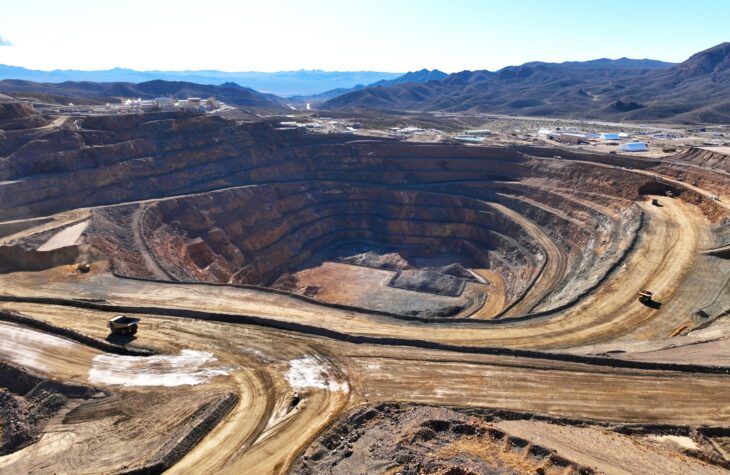
The United States is blessed with an abundance of natural resources. Yet, the ability of our nation to mine and process rare earth minerals remains constrained by both poor policy decisions and logistical challenges. The United States currently possesses the seventh-largest reserves of rare earth minerals in the world at an estimated 1.9 million metric tons.4 But there is only one facility in the entire country that mines rare earths: the Mountain Pass Mine in California.5 Until recently, the facility at Mountain Pass sent a significant portion of its extracted material to China for processing. But in a monumental declaration in April 2025, MP Materials, which operates the Mountain Pass mining operation, responded to China’s enhanced rare earth export controls with an announcement that the company would process half of what it mines on-site and put what remains in reserves until it builds the capacity to fully process its extracted rare earths.6
It is important to note that China possesses the largest rare earth reserves in the world at nearly 44 million metric tons.7 In 2024, the rare earth deposits in China accounted for 70 percent of the world’s total mine production: nearly 270,000 metric tons.8 This figure does not include the possibility of unreported production.9 China processes nearly 90 percent of the world’s rare earths and controls 93 percent of global magnet manufacturing.10 This near-complete control of the rare earths economy is no accident of geography but rather stems from the failings of unrestricted free trade agreements and the actions of radical environmentalists.
It also reveals how Beltway elites were asleep at the wheel after the Cold War. During the mid-1990s, CCP-owned companies received approval from the U.S. government to purchase Magnequench, a magnet and rare earths business started by General Motors.11 This decision paved the way for Chinese state-owned businesses to buy up U.S. assets in the critical mineral space and led to domestic facilities being shuttered and moved overseas to mainland China. Following the passage of trade legislation in 2000 that greenlit “most favored nation” status for China, nearly all U.S. rare earth operations were bought out and moved to China or shut down altogether, including the massive rare earths mining facility at Mountain Pass, which remained closed for nearly a decade before reopening in 2012.12
In 2005, China began imposing export taxes on rare earths that significantly impeded magnet makers in Western countries from producing and competing against Beijing.13 The natural response was for many rare earth–dependent businesses to relocate their operations to China to cut costs and expand access to these resources, albeit under the CCP’s domineering rules. As a result of the West’s allowing the fox into the henhouse, Beijing enjoys near-total dominance of this increasingly vital industry.
The extent of the West’s current overreliance on China for the mining and processing of rare earths and critical minerals is staggering. Between 2020 and 2023, China accounted for 70 percent of U.S. rare earth imports, followed by Malaysia (13 percent), Japan (6 percent), and Estonia (5 percent).14 Overall, the United States was reliant on imports for 80 percent of its rare earth mineral consumption in 2024.15 This is a welcome improvement from 2023, when the United States relied on imports for 95 percent of its rare earth consumption, but it remains a deeply concerning figure.
Beyond rare earths, China also dominates the production of other critical minerals. In 2024, it boasted a 60 percent share of global antimony production, a 79 percent share of global natural graphite production, an 83 percent share of global tungsten production, and a 99 percent share of global gallium production.16 All of these resources are critical for producing chips and manufacturing lithium-ion batteries—a fact that makes China’s control over global battery manufacturing all the more troubling. In 2022, China accounted for 85 percent of the world’s graphite anodes, 82 percent of lithium salt electrolytes, and 74 percent of cathodes—all essential components of the lithium batteries that power the world’s technological infrastructure and defense systems.17
Globalist policymakers willingly handed communist China the stick it is currently wielding against the West. This is a status quo that cannot continue and one that requires an aggressive approach to combat.
Policy Strategy: Developing An America First Approach
China’s recent attempts to constrain exports of rare earths and other critical minerals pose a significant threat to the U.S. economy and national security in both the short and long term. Its latest move regarding magnet exports signals its nefarious intentions, and America First policymakers should not take it lightly. Among the many failings of globalization, overreliance on adversarial nations and compromised supply chains for America’s rare earth minerals are arguably the most concerning. An all-hands-on-deck policy strategy is needed to reassert American dominance over these integral resources.
Deregulation and Development Focus
Congressional lawmakers should embark on an aggressive deregulatory agenda with regard to rare earth and critical mineral production. This should include expedited permitting for mining and processing operations under the National Environmental Protection Act as well as statutory prohibitions on federal agencies to prevent them from using any type of carbon emission or greenhouse gas requirement rooted in climate dogma to stall or hamstring new mining operations.
The executive branch should consider promulgating rules that provide for the preemption of onerous state environmental regulations using the Defense Production Act when necessary and as permitted under federal law. The Environmental Protection Agency, Department of Agriculture, Department of the Interior, and Department of Energy should also issue guidance that takes the most permissive interpretation of relevant statutes within the General Mining Law of 1972 and the Federal Land Policy and Management Act of 1976.
Policymakers must understand that China’s standing policy of flooding global markets with cheap rare earth minerals is designed to prevent other nations from competing. Fighting China’s current dominance in this sector requires serious consideration of price floors for rare earth production and manufacturing operations. These measures may be necessary in an environment where the free market has been eradicated due to communist control over the global means of production.
Manufacturing Incentives
A reinvigorated emphasis on American industrial policy is a necessity for breaking China’s dominance in rare earth minerals. Policymakers should consider tax breaks (specifically, targeted lower corporate rates) and potentially full income tax moratoriums for investors and manufacturers involved in the creation of rare earth end products, especially magnets and other critical mineral–reliant materials.
In tandem with these incentives, corporations that commit to helping the United States break China’s iron grip on the rare earth industry through domestic investment, reshoring initiatives, or mitigating the sale of foreign deposits to Beijing-owned companies should be offered long-term tax moratoriums and preferential access to new projects.
Lastly, Congress should pass a law that prohibits Chinese ownership of or stakes in U.S. manufacturing, mining, energy, and mineral businesses. It should also explicitly preempt states’ ability to bypass such federal restrictions.
Higher Education Incentives
As part of the Trump administration’s effective pushback against woke universities and higher education institutions, the executive branch should issue executive orders and Higher Education Act–related guidance that make future grants, subsidies, and other forms of taxpayer-backed funding dependent on developing technological breakthroughs for rare earth mining and processing. Congress should establish new statutory parameters for federal funding within agencies that not only permanently prohibit grants related to diversity, equity, and inclusion and critical theory but also incentivize higher education institutions to focus on the development of new technologies related to harvesting rare earth elements and that explicitly reject failed climate change dogma and instead embrace American energy dominance.
These parameters should require grant recipients to have no affiliation with China or CCP-backed stakeholders. Additionally, any funding “carrots” issued through the National Science Foundation and other federal entities should be paired with State Department policies that prohibit authorization of student and work visas for Chinese citizens at U.S. universities working on such research.
America’s colleges should be geared toward fostering knowledge that creates more virtuous citizens who meet the critical needs of our republic.
Supply Chain Overhaul
On October 20, 2025, the Trump administration announced an important agreement with Australia to begin reorienting the United States’ reliance on China for critical minerals and rare earths (more on this below). The framework establishes at least $1 billion in new critical minerals and rare earth mining and processing projects over the next six months, with an emphasis on relaxing permitting regulations and addressing gaps in supply chains.18 The initial agreement provides for rare earth mining and processing projects worth up to $8.5 billion.19 This agreement sends the appropriate signal to China that the United States will not allow it to dominate the market and supply of these vital materials.
There are other opportunities to forge a stronger and more stable supply chain outside of Beijing’s sphere of influence. Chief among them is a full realignment of U.S. supply chains.
- Establishing New Markets: Brazil and India are estimated to possess the second- and third-largest reserves of rare earth mineral deposits at 21 million metric tons and 6.9 million metric tons, respectively.20 New bilateral trade agreements, married with targeted tariff relief and other economic and security arrangements, should be used to secure rare earth supply lines to the United States. It will take time for India and Brazil to develop these industries at the domestic level, but U.S. industrial and trade policy should be geared toward incentivizing such development, curbing the ability of Chinese business acquisitions over rare earth markets in these nations and permanently pulling India and Brazil away from Beijing’s orbit.
- Continuing Greenland Initiatives: Greenland, the semi-sovereign nation in the North Atlantic, contains the eighth-largest known reserves of rare earth minerals in the world at more than 1.5 million metric tons.21 Last year, the United States and Denmark successfully convinced Tanbreez Mining not to sell its Greenland-based rare earths projects to a Beijing-owned affiliate, preventing an important supply chain from falling into their adversaries’ hands.22 There are numerous reasons for the United States to continue its diplomatic efforts to achieve greater engagement and integration with Greenland, not the least of which is Greenland’s large supply of critical minerals.23
- Strengthening the Australia Agreement: The Australia agreement provides for significant opportunities in the Pacific to cut into China’s dominance of the rare earth and critical mineral markets. Australia is currently the world’s fourth-largest rare earths producer and home to vast stockpiles of forty minerals deemed critical by the United States Geological Survey.24 More importantly, Australian companies are the largest foreign investors in the U.S. mining sector.25 More arrangements should be made to bolster U.S. access to Australian resources (both rare earths and other critical minerals) while providing Australian firms with expanded and preferential access to reinvigorate America’s domestic mineral capabilities.
- Leveraging Tariff Policy: The new era of tariffs was primarily designed to stop bad actors in the global economy concerning trade imbalances. It now has potential as a tool to break China’s grip on the rare earth industry. Tariffs should be applied in a way that reorients the supply chain. This means continuing to implement steep tariffs on targeted Chinese industries, lower but still meaningful tariffs on transshipment hubs such as Vietnam (which also possesses significant rare earth deposits),26 and preferential tariff arrangements for important and allied nations that agree to move out of Beijing’s trade orbit, especially in the rare earth market.
- Combating Supply Dumping: The standing Chinese policy of flooding global markets with artificially cheap rare earth minerals is designed to deter Western competitors from developing new rare earth mining and processing operations. Unfortunately, it is a policy that has found some success. A new system that encourages friendly nations and Chinese competitors to limit environmental regulations in exchange for temporary price floors would provide a way out of Beijing’s supply manipulation while assuring producers that they will be able to recoup their investments in the decades ahead.
Conclusion
The United States must act aggressively to alter the global economic paradigm on rare earth mining and processing. The failed globalist policies of the post–Cold War era, including unfettered free trade and unending forever wars, have led to a point where America’s foremost foe now controls the vast majority of the world’s most precious resources. Given the extent to which such resources have become central to our economic vitality and national security, and given communist China’s increasing hostility to the United States and its allies, changing this paradigm must be a significant priority of the current and future administrations. New supply lines must be forged, new alliances must be established, new technologies must be developed, and new domestic policies must be enacted.
Combating Beijing’s destructive ambitions will require a whole-of-society effort from elected officials and citizens alike in order for our nation to remain the world’s preeminent superpower. There is no more time to waste.
Endnotes
1. Reuters Staff (October 9, 2025). “China Expands Rare Earths Restrictions, Targets Defense and Chip Users,” Reuters. https://www.reuters.com/world/china/china-tightens-rare-earth-export-controls-2025-10-09/
2. Rare Earth Elements (Accessed October 16, 2025). “What Are Rare Earths?,” Rare Element Resources. https://www.rareelementresources.com/rare-earth-elements/
3. National Minerals Information Center Post (Accessed October 20, 2025). “Rare Earths Statistics and Information,” United States Geological Survey. https://www.usgs.gov/centers/national-minerals-information-center/rare-earths-statistics-and-information
4. Pistilli, M. (February 5, 2025). “Rare Earths Reserves: Top 8 Countries,” Investing News Network.https://investingnews.com/daily/resource-investing/critical-metals-investing/rare-earth-investing/rare-earth-reserves-country/
5. Hanes, S. (April 18, 2025). “There’s One Rare Earths Mine in the U.S. How That Might Change Soon,” The Christian Science Monitor. https://www.csmonitor.com/Environment/2025/0418/rare-earth-minerals-us-china
6. Press Release (April 17, 2025). “MP Materials Accelerates Strategy to Reindustrialize the Rare Earth Supply Chain,” MP Materials. https://mpmaterials.com/news/mp-materials-accelerates-strategy-to-reindustrialize-the-rare-earth-supply-chain/
7. Mineral Commodity Survey (January 2025). “2024 Rare Earths Production,” United States Geological Survey. https://pubs.usgs.gov/periodicals/mcs2025/mcs2025-rare-earths.pdf
8. Ibid
9. Ibid
10. Friedman, G. (November 30, 2022). “Rare-Earth Magnets Are Key to Our Electric Future—And China Controls 93 Percent of Them. How Can Canada Compete?,” Financial Post. https://financialpost.com/commodities/mining/rare-earth-metals-magnets-recycling
11. Emont, J. (October 19, 2025). “How China Took Over the World’s Rare-Earths Industry,” The Wall Street Journal. https://www.wsj.com/economy/trade/how-china-took-over-the-worlds-rare-earths-industry-fb668839
12. Ibid
13. Ibid
14. Venditti, B. (May 1, 2025). “Charted: Where the United States Gets Its Rare Earths From,” Elements. https://elements.visualcapitalist.com/charted-where-the-u-s-gets-its-rare-earths-from/
15. Mineral Commodity Summaries (March 2025). “Mineral Commodity Summaries 2025,” Figure 2, Net Import Reliance United States Geological Survey. https://pubs.usgs.gov/periodicals/mcs2025/mcs2025.pdf
16. Nath, A. and Bean, J. (April 22, 2025). “China’s Critical Mineral Export Controls: Background & Chokepoints,” Observer Research Foundation America. https://orfamerica.org/newresearch/chinas-critical-mineral-export-controls
17. In-Brief Analysis (May 21, 2025). “China Dominates Global Trade of Battery Minerals,” United States Energy Information Administration. https://www.eia.gov/todayinenergy/detail.php?id=65305
18. Presidential Statement (October 20, 2025). “United States-Australia Framework for Securing of Supply in the Mining and Processing of Critical Minerals and Rare Earths,” The White House. https://www.whitehouse.gov/briefings-statements/2025/10/united-states-australia-framework-for-securing-of-supply-in-the-mining-and-processing-of-critical-minerals-and-rare-earths/
19. Kimball, S. (October 20, 2025). “U.S. and Australia Sign Critical Minerals Agreement with $8.5 Billion Project Pipeline,” CNBC. https://www.cnbc.com/2025/10/20/trump-australia-albanese-minerals-rare-earths-china.html
20. Pistilli, M. (February 5, 2025). “Rare Earths Reserves: Top 8 Countries,” Investing News Network. https://investingnews.com/daily/resource-investing/critical-metals-investing/rare-earth-investing/rare-earth-reserves-country/
21. Ibid
22. Reuters Pool Report (January 10, 2025). “U.S. Lobbied Greenland on Rare Earths Developer Tanbreez Not to Sell to China,” Mining.com. https://www.mining.com/web/us-lobbied-greenland-rare-earths-developer-tanbreez-not-to-sell-to-china/
23. Maitra, S. (March 3, 2025). “Toward Greater Engagement and Integration with Greenland and a New American Arctic Century,” Center for Renewing America. https://americarenewing.com/issues/towards-greater-engagement-and-integration-with-greenland-and-a-new-american-arctic-century/
24. Baskaran, G. and Horvath, K. (October 20, 2025). “Unpacking the U.S.-Australia Critical Mineral Framework Agreement,” Center for Strategic & International Studies. https://www.csis.org/analysis/unpacking-us-australia-critical-minerals-framework-agreement
25. Ibid.
26. Brown, S. (July 7, 2025). “Primer: The Threat of Tariff Evasion Within U.S. Trade Policy,” Center for Renewing America. https://americarenewing.com/issues/primer-the-threat-of-tariff-evasion-within-u-s-trade-policy/
Referenced Documents

Related Posts

Can Congress Seat a Member-Elect Who Vows to Destroy our Constitution?
The November 2026 election could produce a member-elect of the House of Representatives who belongs to an organization and adheres to an ideology that has expressly advocated destroying significant components of the existing constitutional structure and who has personally acted to seek those ends.

CRA Submits Comment Supporting Census Bureau’s Proposed Rule
The proposed rule is an important step toward de-weaponizing the decennial
Census. For too long, the Census has been treated as an all-purpose statistical
product rather than as a distinct constitutional function that determines the
allocation of political representation in the United States.

Former Trump DOJ Official Ed Martin Joins Center for Renewing America As Distinguished Fellow
Today the Center for Renewing America (CRA), founded by White House Office of Management and Budget Director Russ Vought, announced that Edward R. Martin Jr., a veteran public servant and former senior official in the Trump Administration’s Department of Justice, will join the organization as a Distinguished Fellow.