
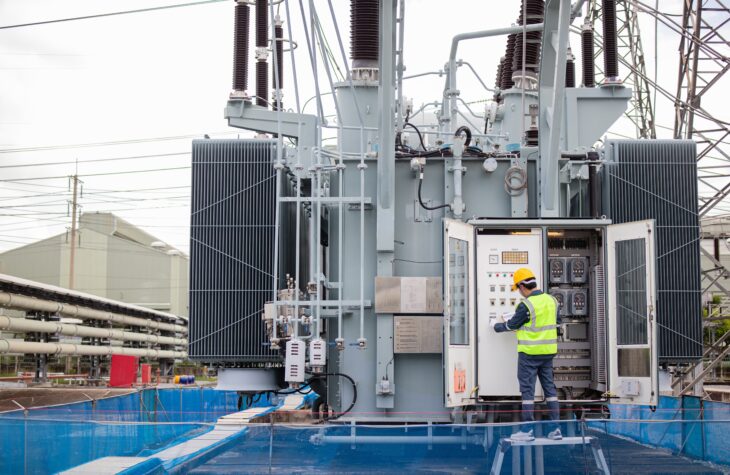
Primer: Reducing Household Utility Costs
By breaking the back of the administrative state—defunding the FCC’s slush funds, stripping the DOE’s appliance authority, and legally removing the EPA’s climate mandates—hundreds of dollars per year can be returned to American households, lowering essential household utility bills.
Family and Future Series
The animating concern of this series of primers is the future of healthy family formation. It is a central purpose of government to cultivate a country in which its citizens can marry, have children, and remain married. The financial obstacles to that way of life are addressed throughout the series. Here, we address structurally high utility costs.
Synopsis
Whether one owns a home, rents, or leases out properties, utility costs are a constant for every household. Electricity, water, gas, and cell phone bills constitute essential expenses for daily life. Those costs, however, have been artificially inflated due to policies pushed by the radical climate lobby and subsidy-seeking telecommunications bureaucracies. For hardworking families, the weaponized administrative state’s grip on our power grid and communications networks has driven otherwise basic living expenses to historic highs.
Background: Weaponized Drivers of Household Costs
Americans face a multitude of obstacles to family formation across nearly every aspect of their lives, including food, health care, housing, transportation, and child- care. These hurdles were built over decades by radical progressive policies designed to weaponize our government’s bureaucracy against the very people from whom it derives its legitimacy. It’s no different with policies impacting basic utilities, which are plagued by green energy mandates and regulations imposed by radical environmentalists and climate change zealots. According to an industry report from September 2025, average household utility costs are up an astounding 41 percent from 2020.1
As of the first quarter of fiscal year 2026, an average family of four faces the following nondiscretionary utility and telecom burdens:
- Household Energy (Electricity and Gas): For a household of four that uses 1,200 kilowatt-hours (kWh) per month at the recent average of $0.1807 per kWh, the monthly cost is roughly $216 combined for electricity.2 According to an analysis from March 2025, an average four-person household uses 6,000–8,000 cubic feet (MCF) of natural gas per month, valued at roughly $16 per MCF.3 This brings the average annual cost of electricity and gas for a family of four to nearly $4,000. For families who require more square footage and use appliances more heavily, this number is higher. Energy costs are also higher in states like California and Massachusetts due to those states’ onerous green energy mandates.4
- Telecommunications (Cell Phones): While costs vary widely depending on carrier and data usage, a standard post-paid four-line unlimited family plan from a major carrier currently averages between $160 and $200 per month.5 While smaller carriers have cheaper options, some require significant up-front payments to unlock lower monthly rates. Factoring in local franchise fees and the massive federal Universal Service Fund (USF) pass-through tax, a family of four will spend around $2,160 annually just to stay connected.6
- Home Internet/Broadband: While costs vary depending on provider, speed, and connection type, the average monthly cost of home internet is now around $73.7 This comes to around $875 annually to provide online access for a household. It’s important to note that these costs are on the lower end of the spectrum for high-speed broadband services.
Note: For purposes of this paper, water bills are excluded. These bills are heavily influenced by local and state policies and vary widely. However, because water is not included, it’s important to view the estimates in this paper as nonexhaustive. Annual and monthly utility costs exceed the figures presented in this paper.
This means that an average family of four is forced to spend at least $7,035 every year on power, heat, and basic connectivity. These costs are necessary to keep the lights on, the heat running, and the internet router connected for both personal and business participation in today’s economy.
Numerous factors contribute to these increasing costs, including aggressively destructive Environmental Protection Agency (EPA) climate regulations and the Broadband Equity, Access, and Deployment (BEAD) program, enacted through former President Joe Biden’s $1.2 trillion infrastructure bill, which incorporated diversity, equity, and inclusion (DEI) and climate mandates that increased the cost of laying fiber-optic cables.8 Fortunately, the BEAD program has been the subject of significant cost-reduction efforts through the Trump administration’s Department of Commerce, with rulemaking aimed at rescinding both DEI and climate burdens.9
Highlighted below are core policies that continue to drive these high costs, along with suggestions to mitigate their negative impact on hardworking families.
The EPA’s War on Baseload Power (Section 111 Rules)
- The Policy Problem: Under Section 111 of the Clean Air Act, the EPA finalized aggressive greenhouse gas standards requiring existing coal plants and new natural gas plants to implement 90 percent Carbon Capture and Sequestration (CCS) by 2030 or face forced retirement.10 CCS is astronomically expensive and largely unproven at scale. This mandate deliberately starves the grid of cheap, reliable baseload generation, forcing utilities to rely on heavily subsidized, unreliable wind and solar energy sources.
- The Solutions: While the Trump administration has successfully begun executive actions to roll back the Section 111 power plant rules and the 2009 endangerment finding, Congress must permanently revoke these destructive policies through statutory changes or a future progressive administration will simply re-implement them.11 This can and should be done through either an appropriations package or a reconciliation bill. Further, utilities must be instructed by state utility commissions, with pressure from federal agencies, to return to a strict “least-cost” procurement standard, ensuring that energy is dispatched based on affordability and reliability rather than destructive climate dogma.
The DOE’s Appliance Extortion Mandates
- The Policy Problem: The Department of Energy (DOE) has weaponized energy efficiency standards to effectively ban affordable household appliances. Recent rules mandate that gas furnaces in northern states meet a 95 percent Annual Fuel Utilization Efficiency rating by 2028.12 This mandate forces families to abandon affordable entry-level furnaces, which cost around $1,500, in favor of complex, overengineered condensing units that can cost more than $3,000 to install. Further, the rule threatens to increase maintenance and structural home repair costs for these high-cost units.
- The Solution: Congress should consider legislation that includes policies found in the Home Appliance Protection and Affordability Act (H.R. 4626),13 which strips the DOE of its authority to mandate standards that drastically increase up-front consumer costs. Families, not federal bureaucrats, should decide which appliances best fit their budgets. If such provisions cannot be implemented as standalone measures, Congress should incorporate them into an appropriations package or a reconciliation bill.
The FCC’s Universal Service Fund Tax
- The Policy Problem: The Federal Communications Commission (FCC)’s USF is an extralegal slush fund that bypasses normal congressional appropriations. As of the second quarter of fiscal year 2026, the FCC has set the USF contribution factor at a staggering 37 percent.14 This means telecom carriers are taxed 37 cents per dollar of interstate end-user revenue—a cost passed directly to consumers as a hidden surcharge to bankroll programs riddled with waste and fraud, such as the Lifeline program.15
- The Solutions: Last year, the Supreme Court rejected a challenge to the USF in Federal Communications Commission v. Consumers’ Research.16 But this 6–3 decision need not be the last word on the matter. In March 2026, the FCC announced a notice of proposed rulemaking to pare back the USF.17 Congress should join in this effort to abolish the FCC’s unilateral taxing authority. It should also consider preempting local governments’ telecom franchise fees, which add to household costs. If the federal government wishes to subsidize rural broadband or low-income connectivity, that initiative must be debated transparently in Congress and funded through the discretionary budget.
Savings Estimates: Dual-Tier Household Analysis
By implementing the solutions outlined above, policymakers can significantly lower annual utility costs for families. Below is a chart showing estimated annual savings predicated on a mixture of policies. The Moderate Reform tier estimates savings for executive actions combined with policy reforms enacted through Congress. The Maximum Repeal tier estimates the full benefits of repealing or prohibiting these cost-driving policies through statutory changes rather than relying on temporary fixes from the executive branch.
Note: It’s important to emphasize that the table below relies on estimates for an average four-person household with a father, a mother, and two children. The estimates are based on current inflation-adjusted savings targets, ten-year amortization, and median price points. Depending on the household, these numbers could be higher or lower.
| Deregulatory Action | Moderate Reform Annual Savings In this scenario, there is a combination of executive actions and modest statutory policy reforms. | Maximum Repeal Annual Savings In this scenario, harmful policies are fully repealed and enacted into statute through congressional legislation. |
| Energy: Address Section 111 of the Clean Air Act and Restore Baseload Power | $300 | $550 |
| Energy: Address DOE Appliance Mandates (Amortized) | $150 | $300 |
| Telecom: Address the FCC’s 37% USF Tax | $150 | $280 |
| Telecom: Preempt Local Telecom Franchise Fees | $75 | $120 |
| Total Projected Annual Savings | $675 | $1,250 |
These projections mean that a combination of executive action and congressional reforms to the existing policies discussed above could reduce the household utility burden by as much as 9.6 percent for an average family of four paying $7,035 in annual costs. With complete statutory repeal of the existing progressive policy mandates, relief would be considerably higher, at a projected 17.8 percent reduction of the current burden.
Conclusion
Ensuring affordable energy for American households through reforms like these is the essence of a family-focused agenda. There is no need for inflation-driving stimulus checks or new entitlement programs to help families thrive. By breaking the back of the administrative state—defunding the FCC’s slush funds, stripping the DOE’s appliance authority, and legally removing the EPA’s climate mandates—hundreds of dollars per year can be returned to American households, lowering essential household utility bills. It is time to stop managing the woke and weaponized bureaucracy and start dismantling it.
Endnotes
1. Utilities Intelligence Report (September 4, 2025). “Average Household Utility Costs Rise 41% in Last Five Years,” JDPower. https://www.jdpower.com/business/resources/average-household-utility-costs-rise-41-last-five-years
2. Ellis, T. and Vasquez, D. (February 19, 2026). “Household Savings from Energy Dominance: One Year Later,” America First Policy Institute. https://www.americafirstpolicy.com/issues/household-savings-from-energy-dominance-one-year-later
3. Castle, T. (2025). “How Much Is the Average Gas Bill Per Month?,” Santanna Energy Services. https://santannaenergyservices.com/how-much-is-the-average-gas-bill-per-month/
4. Ritchie, C. (April 3, 2026). “Natural Gas Rates by State,” Choose Energy. https://www.chooseenergy.com/data-center/natural-gas-rates-by-state/. California is listed as $22.96 per MCF, and Massachusetts is listed as $25.77 per MCF.
5. Michael, P. (January 15, 2026). “Best Family Cell Phone Plan in 2026,” Tom’s Guide. https://www.tomsguide.com/best-picks/best-family-cell-phone-plan
6. Public Notice (March 16, 2026). “Proposed Second Quarter 2026 Universal Service Contribution Factor,” Federal Communications Commission. https://docs.fcc.gov/public/attachments/DA-26-218A1.pdf
7. Brooks, A. (February 16, 2026). “How Much Does Internet Cost Per Month?,” Forbes. https://www.forbes.com/home-improvement/internet/internet-cost-per-month/
8. NTIA Policy Notice (June 6, 2025). “BEAD Restructuring Policy Notice,” National Telecommunications and Information Administration. https://www.ntia.gov/sites/default/files/2025-06/bead-restructuring-policy-notice.pdf
9. Ibid.
10. Press Release (May 11, 2023). “EPA Proposes New Carbon Pollution Standards for Fossil Fuel–Fired Power Plants to Tackle the Climate Crisis and Protect Public Health,” Environmental Protection Agency. https://www.epa.gov/newsreleases/epa-proposes-new-carbon-pollution-standards-fossil-fuel-fired-power-plants-tackle
11. Notice of Proposed Rulemaking (June 17, 2025). “Repeal of Greenhouse Gas Emissions Standards for Fossil Fuel-Fired Electric Generating Units,” Federal Register. https://www.federalregister.gov/documents/2025/06/17/2025-10991/repeal-of-greenhouse-gas-emissions-standards-for-fossil-fuel-fired-electric-generating-units; News Release (February 12, 2026). “President Trump and Administrator Zeldin Deliver Single Largest Deregulatory Action in American History,” Environmental Protection Agency. https://www.epa.gov/newsreleases/president-trump-and-administrator-zeldin-deliver-single-largest-deregulatory-action-us
12. Notice of Proposed Rulemaking (December 18, 2023). “Energy Conservation Program: Energy Conservation Standards for Consumer Furnaces,” Federal Register. https://www.federalregister.gov/documents/2023/12/18/2023-25514/energy-conservation-program-energy-conservation-standards-for-consumer-furnaces
13. Representative Rick Allen (GA, 12th Congressional District). “H.R. 4626—Home Appliance Protection and Affordability Act,” Congress.gov. https://www.congress.gov/bill/119th-congress/house-bill/4626
14. Public Notice (March 16, 2026). “Proposed Second Quarter 2026 Universal Service Contribution Factor,” Federal Communications Commission. https://docs.fcc.gov/public/attachments/DA-26-218A1.pdf
15. Norris, N. (January 29, 2026). “FCC Finds Shocking Amount of Fraud in Its Lifeline Program,” Americans for Tax Reform. https://atr.org/fcc-finds-shocking-amount-of-fraud-in-its-lifeline-program/
16. Federal Communications Commission v. Consumers’ Research (June 27, 2025). No. 24-354
17. FCC Fact Sheet (March 5, 2025). “Modernizing Suspension and Debarment Rules,” GN Docket No. 19-309, Federal Communications Commission. https://docs.fcc.gov/public/attachments/DOC-419257A1.pdf
Referenced Documents

Related Posts
Can Congress Seat a Member-Elect Who Vows to Destroy our Constitution?
The November 2026 election could produce a member-elect of the House of Representatives who belongs to an organization and adheres to an ideology that has expressly advocated destroying significant components of the existing constitutional structure and who has personally acted to seek those ends.
CRA Submits Comment Supporting Census Bureau’s Proposed Rule
The proposed rule is an important step toward de-weaponizing the decennial
Census. For too long, the Census has been treated as an all-purpose statistical
product rather than as a distinct constitutional function that determines the
allocation of political representation in the United States.
Former Trump DOJ Official Ed Martin Joins Center for Renewing America As Distinguished Fellow
Today the Center for Renewing America (CRA), founded by White House Office of Management and Budget Director Russ Vought, announced that Edward R. Martin Jr., a veteran public servant and former senior official in the Trump Administration’s Department of Justice, will join the organization as a Distinguished Fellow.