
Primer: Reducing Transportation Costs for American Families
Family and Future Series
The animating concern of this series of primers is the future of healthy family formation. It is a central purpose of government to cultivate a country in which its citizens can marry, have children, and remain married. The financial obstacles to that way of life are addressed throughout the series. Here we address structurally high transportation costs.
Synopsis
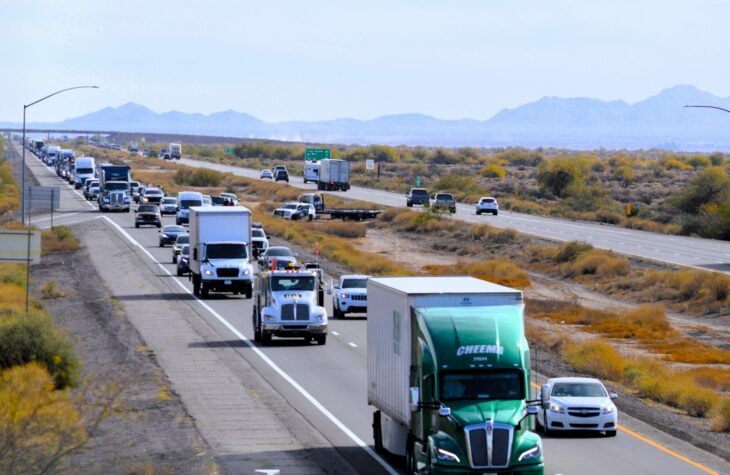
Transportation is an essential component of daily life, particularly in a nation that spans an entire continent. According to the Census Bureau, more than 85 percent of America’s 150 million workers commuted by automobile in 2022, equivalent to more than 128 million people.1 Historically, the percentage of American workers who commute is much higher (nearly 95 percent as recently as 2019); however, the onset of the COVID-19 pandemic and work-from-home protocols have reduced those totals. Despite the larger number of people working from home, the vast majority of households still rely on transportation to access employment, education, church, health care, child care, and other everyday activities. Yet this essential component of daily life is increasingly squeezing families with needless costs due to decades of onerous regulations, exorbitant subsidy schemes controlled by well-connected industries, and nonsensical mandates that operate as a massive hidden tax on Americans.
Many of these policies stem from adherence to a radical climate dogma where the pain inflicted on families is the point. The weaponization of federal agencies in service to this destructive green agenda—often operating in tandem with woke framing like that of former President Joe Biden’s Justice40 Initiative—has accelerated this trend.2 Fortunately, there is no shortage of ways to alleviate the pressure and make transportation more affordable for hardworking American families.
Background: The Progressive Dogma Driving Costs
Increased transportation costs are more than mere annoyances or inconveniences. As with health care, child care, and housing, the rising cost of transportation serves as a hidden tax on work, particularly for the overwhelming majority of American workers who rely on automobiles for gainful employment. When the cost of purchasing or operating a vehicle rises, it diminishes the value of one’s paycheck, diverts hard-earned resources needlessly, and weakens job mobility. Further, when the cost of operating a vehicle is thousands of dollars more expensive than necessary, it discourages in-person economic, faith-based, and family-oriented activities that are essential for forming families and building healthy communities.
Decades of progressive policies rooted in environmental extremism have squeezed American families out of affordable and reliable modes of transportation. Whether it’s onerous infrastructure development regulations attached to the National Environmental Policy Act (NEPA), special interest mandates that force food into fuel carried out by the Environmental Protection Agency (EPA), zealous regulatory capture rooted in the climate lobby’s classification of greenhouse gases as health hazards, follow-on regulations creating costly emissions caps, or exorbitant subsidies designed to divert tax dollars toward minimally utilized transit operations, federal transportation policy is designed to reward specific industries at the expense of hardworking Americans.
A significant consequence of these efforts is that the price of a new car has increased by more than 30 percent since 2020 and nearly 47 percent since 2016.3 The average price of a new car is now nearly $50,000.4 This is an unsustainable burden on the vast majority of American households.
A Better Way: Put American Families First
The operational paradigm for enacting an America First transportation vision is simple: Transportation should be reliable and affordable. Any policy that does not serve those two primary goals should be discarded and repealed. Any agenda that prioritizes the well-being of “the climate,” “the planet,” or “the environment” over the well-being of families and family formation is fundamentally at war with people. Transportation, like so many other areas of public policy, is now an arena designed to placate environmental extremists and reward special interests through crony subsidy schemes and taxpayer-backed rewards, all under the guise of “protecting” the planet. Devotion to these policies exposes the hollow hypocrisy of the progressive movement’s sudden interest in “affordability” amid its single-minded approach to raise costs on families to enrich the favored few in the name of a climate cult.
A family-first vision cannot accept this destructive dogma. Adoption of policies that put households and working families first will translate into tangible savings and improve the reliability of transportation. Despite the predictable wailing and gnashing of teeth from progressive extremists, policymakers should not hesitate to take the following steps.
Step One: Permanently Eliminate the Endangerment Finding
The Trump administration has made significant moves to end the EPA’s disastrous 2009 endangerment finding, which classified carbon dioxide and other greenhouse gases, such as methane, as health threats.5 Politically motivated from the start, this regulatory action imposed trillions of dollars in cost increases on American families over the past seventeen years and serves as the linchpin for the government’s globalist climate agenda. Using executive action to rescind the regulation under Section 202 of the Clean Air Act is a short-term solution worthy of support, but additional steps are needed to provide lasting relief:
- Statutory Repeal: Congress must enact binding statutory language that permanently repeals the 2009 endangerment finding. This can be done through an appropriations package or a reconciliation bill.
- Statutory Prohibition: Congress also must preempt future efforts to resurrect onerous climate mandates for automobiles and other common modes of transportation. Language should be included in an appropriations package or a reconciliation bill that prohibits the EPA or any other federal agency from issuing regulations classifying greenhouse gases (GHGs) as threats to public health and welfare.
Estimated Benefits: With the endangerment finding eliminated, weaponized bureaucracies would lose their legal standing to issue EV mandates, dictate vehicle design standards, and penalize domestic refineries. Further, eliminating the endangerment finding will result in average cost savings of $2,400 per vehicle in purchase and operating costs, with an estimated total savings of $1.3 trillion.6 The annual transportation savings for an American family of four are estimated at an average of $350, with a bare minimum of $200 per year, when amortized over a decade and factoring in reduced vehicle costs, the deregulatory impact on automakers, and the end of arbitrary GHG metrics as production inputs.
Step Two: Cancel the CAFE Standards
The Corporate Average Fuel Economy (CAFE) standards are among the biggest drivers of rising transportation expenses. Enacted in the Energy Policy Conservation Act of 1975, these standards impose penalties on automakers for creating “inefficient” vehicles.7 Automakers are required to spend billions of dollars every year to engineer vehicles that meet costly efficiency requirements, which are often tied to arbitrary emissions targets. Proponents argue that the standards improve fuel efficiency and thereby save money over the vehicle’s lifespan, making up for increased up-front costs. The reality is that the standards have raised the purchase cost of a new vehicle by at least $6,200 (by a very conservative estimate), constraining households by making transportation prohibitively expensive.8
The Trump administration has taken critical steps to lift the burden of CAFE standards by implementing statutory changes in the One Big Beautiful Bill Act that reduce automaker penalties for noncompliance to zero.9 This welcome action provides an incentive for automakers to develop lower-cost vehicles. Yet additional actions should be taken to ensure families feel the economic relief sooner:
- Statutory Repeal: Congress should amend the 1975 energy bill to repeal by statute the language that created the CAFE standards. An olive branch that can be offered to environmentalists is an agreement to require automakers to inform consumers of fuel-efficiency standards for every new model going forward.
- State Preemption: Congress should preempt states from imposing onerous fuel-efficiency standards in the next highway bill, with a simple trigger enacted into statute. Any state that accepts federal highway dollars should be prohibited from implementing policies that penalize automakers for creating allegedly “inefficient” vehicles. While nothing in statute should prohibit automakers from making fuel-efficient vehicles if they want, the days of forcing companies to impose significant cost increases on Americans to offset the costs of expensive climate agenda–driven inputs must end.
Estimated Benefits: With the CAFE standards repealed at the federal level and preempted at the state level, average cost savings are estimated to be at least $6,200 per vehicle (in purchase price alone). The annual transportation savings for an American family of four are estimated at $620 when amortized over a decade.
Step Three: Erase the Ethanol Mandate
The Renewable Fuel Standard (RFS) is a textbook example of Washington cronyism prioritizing agricultural special interests over working families. By mandating the blending of billions of gallons of corn ethanol into the national fuel supply, the government artificially distorts both the energy and agricultural markets. Under the RFS, refiners who cannot blend enough ethanol must purchase Renewable Identification Numbers (RINs) to comply with the EPA mandate.10 These compliance credits act as a massive, invisible tax on American families.
Furthermore, the American Petroleum Institute and automotive experts have long warned that higher ethanol blends (such as E15) degrade plastic and rubber fuel lines and damage membranes in fuel pumps.11 Ethanol has roughly 33 percent less energy content than pure gasoline, causing drivers to suffer a direct loss in miles per gallon (mpg).12 Additionally, the RFS diverts roughly 40 percent of the entire U.S. corn crop away from the food supply and directly into gas tanks.13 A report by PwC revealed that this mandate costs the chain restaurant and food industry over $3.2 billion annually—costs that are passed directly to families’ grocery bills.14 Exorbitant RIN prices also add an estimated 20 to 30 cents per gallon to consumers’ fuel costs.15 The RFS should be completely repealed by statute as part of a reconciliation bill.
Estimated Benefits: Data on average annual fuel consumption per vehicle suggest that eliminating the ethanol mandate will save families of four at least $260 per year on fuel costs alone, and potentially as much as $1,200 per year when accounting for higher mileage and reduced grocery costs.
Step Four: Modernize Mass Transit and Infrastructure
Mass transit is mostly a regional issue, primarily in the Northeastern United States. According to the Bureau of Transportation Statistics, mass transit accounts for just 1.5 percent of all trips but siphons off nearly 20 percent of available funds within the federal Highway Trust Fund (HTF).16 Census data suggest that just under 4 percent of workers use mass transit to commute to work daily, underscoring the imbalances at play within federal transportation policies.17
Of greater concern is that mass transit and federal infrastructure policy remain in the control of money-hungry political unions that demand more taxpayer funds despite relatively limited ridership and predictable cost increases. When Americans pay gas taxes and tolls, they expect that money to go toward fixing potholes. Instead, statutory requirements such as the Davis–Bacon Act mandate that federally funded infrastructure projects pay “prevailing wages” that are actually higher than market rate, effectively acting as a union handout.
These dynamics have created an operational paradigm in which transit agencies recover an increasingly small share of their costs from user fees and fares. Entities like Amtrak, which ran an annual deficit of $1.76 billion in FY2025 despite exorbitant federal subsidies, are highly unprofitable.18 Meanwhile, prevailing wage laws siphon resources to unions, inflating infrastructure costs, rewarding well-connected entities, and slowing down construction. While some policy actions designed to alleviate these issues will primarily benefit families in the Northeast, they remain important for the broader goal of enabling family formation.
- Reform the Federal Transit Act: Section 13(c) of the Federal Transit Act is a labor provision that gives transit unions veto power over federal grants, blocking agencies from contracting out maintenance to cheaper private-sector providers. This is a major cost driver in operations. Congress should repeal this provision in an appropriations rider or the next highway bill.
- Discard Davis–Bacon Wage Requirements: Congress should fully repeal the Davis–Bacon Act, which costs taxpayers at least $11 billion annually due to significantly inflated wages that sit more than 20 percent above prevailing market rates.19
- End Highway Trust Fund Diversions: Congress must sever the link between the HTF and urban mass transit in the next highway bill. This can be done by terminating the Mass Transit Account and instituting a statutory prohibition on future diversions from the HTF to regional or state mass transit authorities.
- Privatize Amtrak: Congress must halt taxpayer bailouts of Amtrak’s unprofitable rural routes. Amtrak’s most recent grant request exceeds $2.5 billion for FY2026, despite the agency running annual deficits of more than $1 billion.20
Estimated Benefits: Taken together, these reforms would result in annual savings of at least $35 billion for taxpayers. Estimates suggest that transportation costs would drop by at least $200 per year for an average family of four due to the elimination of federal subsidies, lower transit maintenance costs from privatization, and improved construction timelines from the repeal of the Davis–Bacon Act, which would reduce traffic congestion and gas consumption. For families in the Northeastern United States, particularly those who use mass transit for work, the savings would likely be higher.
Step Five: Nullify NEPA’s Remaining Environmental Strangleholds
NEPA has become the primary weapon radical environmentalists use to attack American infrastructure projects, bogging them down in excessive and costly environmental reviews. The Trump administration has made great progress in curtailing NEPA’s corrosive impact on infrastructure development with the issuance of Executive Order (EO) 14154 and EO 14192, which direct agencies to pare back NEPA regulations and streamline permitting approval processes.21 22
A recent Department of the Interior (DOI) final rule implements these EOs, with the DOI wisely establishing a strict page count on regulations and the Council on Environmental Quality (CEQ) rescinding significant portions of its NEPA portfolio following a North Dakota district court decision holding that NEPA does not authorize the CEQ to promulgate implementing regulations.23
- Additional Executive Actions: The administration should direct the CEQ to revise the remaining NEPA regulations to prioritize benefits and cost analyses and to permit additional categorical exclusions that eliminate requirements for environmental assessments and environmental impact statements.
- Broader Reforms: Congress should implement statutory changes that narrow the definition of a “major federal action,” impose a strict sixty-day statute of limitations for NEPA lawsuits, and codify a shot clock that ensures automatic permit approvals if bureaucrats miss deadlines.
Estimated Benefits: The reforms implemented by DOI are already expected to save taxpayers at least $21 million per year.24 Estimates suggest that transportation costs for an average family of four will be reduced by at least $250 per year when accounting for additional reforms that eliminate the hidden tax on consumers caused by project delays.
Step Six: Secure Sensible Safety Requirements
American automakers have been forced to create a veritable nanny-state dashboard of expensive, highly complex safety suites for new vehicles. Overseen by the National Highway Traffic Safety Administration (NHTSA), these suites strip away consumer choice in an effort to achieve minimal or zero-risk travel. Vehicles loaded with advanced driver-assistance systems (ADAS) add significantly to vehicle costs and insurance premiums. Ensuring reliable and affordable transportation requires giving American families the choice of whether to include these complex suites in their vehicles.
- Rescind NHTSA Regulations: Congress should rein in NHTSA’s statutory authority to mandate specific electronic safety features. Safety technology should be an optional upgrade based on market demand, not a universal federal mandate that prices working-class families out of the new car market. By repealing these mandates, automakers can once again offer affordable, mechanically reliable base-model vehicles.
Estimated Benefits: Some studies suggest that the inclusion of ADAS suites and other advanced safety features accounts for roughly 37 percent of repair costs for vehicles involved in minor collisions or major accidents.25 Rolling back these features will result in significantly lower repair and maintenance costs and lower insurance premiums. Estimates suggest that removing these convoluted features could reduce annual costs for an American family of four by $150.
Step Seven: Accelerate Transportation into the Future
Finally, Congress should rescind all federal EV mandates. Data suggests that every EV sold creates a $50,000 socialized cost on American households for the required infrastructure to support these expensive creations of climate zealotry.26 This includes nearly $12,000 in additional strain on the electric grid paid by working families over a decade.27 Contrary to the claims of radical progressives, EVs are not guaranteed to be the vehicles of the future. In fact, data show that their sales are in freefall as many Americans reject them because of their high costs and lack of utility.28 If there is a market for EVs, it should be driven by consumer choice rather than coercive government mandates.
A 2019 Council of Economic Advisers assessment also found that opening up domestic drilling and energy production would provide substantial savings for American households well into the future—perhaps as much as $2,500 annually for households that require high-mileage vehicles.29 Additionally, autonomous vehicles (AVs) have the potential to significantly slash transportation costs for families and alleviate supply chain bottlenecks by operating without the constraints imposed by federal Hours-of-Service (HOS) regulations. The impact of autonomous trucking has the potential to drastically reduce the cost of consumer goods and the insurance associated with long-haul truck drivers. The changes brought by AVs are reasonably estimated to lead to lower prices for goods and services throughout the supply chain.
Projected Savings and What the Future Holds
Implementing these America First policies would yield immediate and substantial financial relief and bolster family formation. Because fuel consumption, utility footprints, and vehicle purchasing habits vary, we have calculated both a conservative minimum and a maximum estimate of potential savings. These calculations are based on a four-person household and assume it has two vehicles that consume an average number of gallons of gasoline per year. However, the full range provided below accounts for above-average transportation usage and fuel consumption.
By removing the heavy hand of the federal government, crushing union monopolies, unshackling from destructive climate dogma, and embracing automation, a typical family of four could save between $3,530 and $8,170 annually, compounding to between $35,300 and $81,700 over a decade.
| Policy Action / Deregulation Area | Annual Savings (Min–Max) | 10-Year Savings (Min–Max) | Description & Variables |
| Endangerment Finding & Regulatory Deflation | $200–$500 | $2,000–$5,000 | Eliminates EPA GHG compliance burdens. Variance depends on regional fuel and industrial utility footprints. |
| Repeal of the Ethanol Mandate (RFS) | $500–$1,200 | $5,000–$12,000 | Halts ethanol-driven grocery inflation, removes RIN premiums, and restores mpg. Variance is based on family fuel consumption and grocery spending. |
| Fuel and Energy Deregulation | $1,000–$2,500 | $10,000–$25,000 | Lowers base fuel prices by unleashing domestic drilling. |
| Vehicle Acquisition (CAFE Repeal) | $380–$720 | $3,800–$7,200 | Removes the regulatory premium on gas-powered cars. Variance depends on whether a family buys 1 or 2 cars per decade and the vehicle class. |
| Elimination of Socialized EV Mandate Costs | $800–$1,500 | $8,000–$15,000 | Eliminates the taxpayer/ratepayer burden of EV subsidies and grid strain. Variance depends on state-level grid vulnerability. |
| Repeal of NHTSA Safety Mandates | $150–$450 | $1,500–$4,500 | Removes mandatory ADAS and start-stop tech ($1,500 premium per vehicle). Variance is based on purchasing 1 to 3 vehicles over a decade. |
| Taxpayer and Mass Transit Savings | $100–$300 | $1,000–$3,000 | Repeals Davis–Bacon and guts Section 13(c). Variance depends on local/municipal tax burdens for transit operations. |
| Dismantling of the NEPA Labyrinth | $250–$600 | $2,500–$6,000 | Eliminates the hidden consumer tax caused by infrastructure, manufacturing, and broadband delays. Variance is based on local infrastructure needs. |
| Autonomous Supply Chain Deflation | $150–$400 | $1,500–$4,000 | Marks deflationary impact of autonomous trucking on consumer goods and stabilized AV insurance. Variance is based on household purchasing volume. |
| Total Estimated Savings | $3,530–$8,170 | $35,300–$81,700 | Calculates total retained capital for a working-class family of four. |
Conclusion
The path to reliable and affordable transportation does not run through more federal spending, heavier top-down regulation, climate extremism, or capitulation to union bosses. It requires dismantling the administrative hurdles that inflate costs, restrict choice, and punish the working class. By prioritizing the American family over environmental extremists and special interests, policymakers can rebuild our infrastructure, drastically reduce the cost of living, and restore true freedom of mobility.
Endnotes
1. Burrows, M. and Burd, C. (February 2024). “Commuting in the United States: 2022,” American Community Survey Briefs. https://www2.census.gov/library/publications/2024/demo/acsbr-018.pdf
2. GAO Report (September 9, 2025). “Environmental Justice: Agency Actions to Implement Past Justice40 Initiative,” Government Accountability Office. https://www.gao.gov/assets/890/881479.pdf
3. Carbonaro, G. (January 17, 2024). “Americans Can No Longer Afford Their Cars,” Newsweek. https://www.newsweek.com/americans-can-no-longer-afford-their-cars-1859929; Laing, K. (January 17, 2026). “The Year Was 2016. And New Cars Were $16K Cheaper Than They Are Today,” USA Today. https://www.usatoday.com/story/cars/news/2026/01/17/auto-industry-changed-since-2016/88219794007/
4. Ibid.
5. News Release (February 12, 2026). “President Trump and Administrator Zeldin Deliver Single Largest Deregulatory Action in American History,” Environmental Protection Agency. https://www.epa.gov/newsreleases/president-trump-and-administrator-zeldin-deliver-single-largest-deregulatory-action-us; Summary Brief (December 7, 2009). “EPA’s Endangerment Finding,” Environmental Protection Agency. https://www.epa.gov/sites/default/files/2016-08/documents/endangermentfinding_legalbasis.pdf
6. News Release (February 12, 2026). “President Trump and Administrator Zeldin Deliver Single Largest Deregulatory Action in American History,” Environmental Protection Agency. https://www.epa.gov/newsreleases/president-trump-and-administrator-zeldin-deliver-single-largest-deregulatory-action-us
7. Douglas, C. (October 3, 2022). “The Costs and Benefits of CAFE Standards,” Mackinac Center for Public Policy. mackinac.org/S2022-06#overview-and-history-of-cafe-standards
8. Furth, S. and Kreutzer, D. (March 4, 2016). “Fuel Economy Standards Are a Costly Mistake,” The Heritage Foundation. https://www.heritage.org/government-regulation/report/fuel-economy-standards-are-costly-mistake
9. Ditch, D. (July 30, 2025). “Congress Closes the CAFE,” Economic Policy Innovation Center. https://epicforamerica.org/federal-budget/congress-closes-the-cafe/
10. Bracmort, K. (September 24, 2025). “The Renewable Fuel Standard (RFS): An Overview,” Congressional Research Service. https://www.congress.gov/crs-product/R43325
11. News Release (April 16, 2018). “API Warns Against Approval of Year Round E-15 Sales, Asserting the Need to Protect American Consumers,” Fuels Market News. https://fuelsmarketnews.com/api-warns-against-approval-of-year-round-e-15-sales-asserting-the-need-to-protect-american-consumers/
12. Fuel Properties Brief (Accessed March 20, 2026). “Ethanol,” Technology Collaboration Programme on Advanced Motor Fuels. https://iea-amf.org/content/fuel_information/ethanol/fuel_properties
13. O’Malley, J. and Searle, S. (January 2021). “The Impact of the U.S. Renewable Fuel Standard on Food and Feed Prices,” International Council on Clean Transportation. https://theicct.org/wp-content/uploads/2021/06/RFS-and-feed-prices-jan2021.pdf
14. National Council of Chain Restaurants Hearing Statement (June 22, 2016). “The Renewable Fuel Standard–Implementation Issues,” U.S. House Committee on Energy and Commerce, Subcommittee on Energy and Power. https://docs.house.gov/meetings/IF/IF03/20160622/105101/HHRG-114-IF03-20160622-SD008.pdf
15. Furchtgott-Roth, D. (December 6, 2022). “Higher Ethanol Mandates Are a Lose-Lose for Americans,” The Heritage Foundation. https://www.heritage.org/environment/commentary/higher-ethanol-mandates-are-lose-lose-americans
16. Chapter 2 (Accessed March 20, 2026). “Passenger Travel,” Bureau of Transportation Statistics. https://data.bts.gov/stories/s/Chapter-2-Passenger-Travel/3t3v-vpmv/; Davis, J. (November 21, 2025). “DOT Explores Killing Dedicated Fuel Tax Revenues Now Going to Mass Transit,” Eno Center for Transportation. https://enotrans.org/article/dot-explores-killing-dedicated-fuel-tax-revenues-now-going-to-mass-transit/
17. Census Brief (September 22, 2025). “United States Commuting at a Glance: American Community Survey 1-Year Estimates,” U.S. Census Bureau. https://www.census.gov/topics/employment/commuting/guidance/acs-1yr.html
18. Davis, J. (December 5, 2025). “Amtrak Reports Smaller Losses, Higher Ridership in FY2025,” Eno Center for Transportation. https://enotrans.org/article/amtrak-reports-smaller-losses-higher-ridership-in-fy-2025/
19. Sherk, J. (February 14, 2011). “Repealing the Davis-Bacon Act Would Save Taxpayers $10.9 Billion,” The Heritage Foundation. https://www.heritage.org/jobs-and-labor/report/repealing-the-davis-bacon-act-would-save-taxpayers-109-billion
20. Fiscal Year 2026 Grant Request (2025). “General and Legislative Annual Report,” Amtrak. https://www.amtrak.com/content/dam/projects/dotcom/english/public/documents/corporate/reports/Amtrak-General-Legislative-Annual-Report-FY2026-Grant-Request.pdf
21. Executive Order 14154 (January 20, 2025). “Unleashing American Energy,” Federal Register. https://www.federalregister.gov/documents/2025/01/29/2025-01956/unleashing-american-energy
22. Executive Order 14192 (January 31, 2025). “Unleashing Prosperity Through Deregulation,” Federal Register. https://www.federalregister.gov/documents/2025/02/06/2025-02345/unleashing-prosperity-through-deregulation
23. Press Release (February 23, 2026). “Trump Administration Delivers Historic NEPA Reform, Unleashing Resources on America’s Public Lands,” U.S. Department of the Interior. https://www.doi.gov/pressreleases/trump-administration-delivers-historic-nepa-reform-unleashing-resources-americas
24. Final Rule Analysis (February 2026). “DOI Regulatory Impact Analysis for NEPA Procedures,” U.S. Department of the Interior. https://www.doi.gov/media/document/doi-regulatory-impact-analysis-nepa-procedures
25. AAA Report (December 2023). “Cost of Advanced Driver Assistance Systems (ADAS) Repairs,” AAA. https://newsroom.aaa.com/wp-content/uploads/2023/11/Report_Cost-of-ADAand theS-Repairs-FINAL-23.pdf
26. Bennett, B. and Isaac, J. (October 2023). “Overcharged Expectations: Unmasking the True Costs of Electric Vehicles,” Texas Public Policy Foundation. https://www.texaspolicy.com/wp-content/uploads/2023/10/2023-10-TrueCostofEVs-BennettIsaac.pdf
27. Ibid.
28. Korn, M. (March 8, 2026). “Electric Vehicle Sales Are Plummeting. Will They Soon Become Too Niche?,” ABC News. https://abcnews.com/Business/electric-vehicle-sales-plummeting-become-niche/story?id=130752429
29. CEA Report (October 2019). “The Value of U.S. Energy Innovation and Policies Supporting the Shale Revolution,” The Council of Economic Advisors. https://trumpwhitehouse.archives.gov/wp-content/uploads/2019/10/The-Value-of-U.S.-Energy-Innovation-and-Policies-Supporting-the-Shale-Revolution.pdf
Referenced Documents

Related Posts
Primer: Reducing Transportation Costs for American Families
The path to reliable and affordable transportation does not run through more federal spending, heavier top-down regulation, climate extremism, or capitulation to union bosses. It requires dismantling the administrative hurdles that inflate costs, restrict choice, and punish the working class.


Primer: Reducing the Costs of Real Food for Families
The animating concern of this series of primers is the future of healthy family formation. It is a central purpose of government to cultivate a country in which citizens can marry, have children, and remain married. The financial obstacles to that way of life are addressed throughout the series. Here we address rising food costs.