
Primer: Why Disney and Broadcasters Were Right to Suspend Jimmy Kimmel
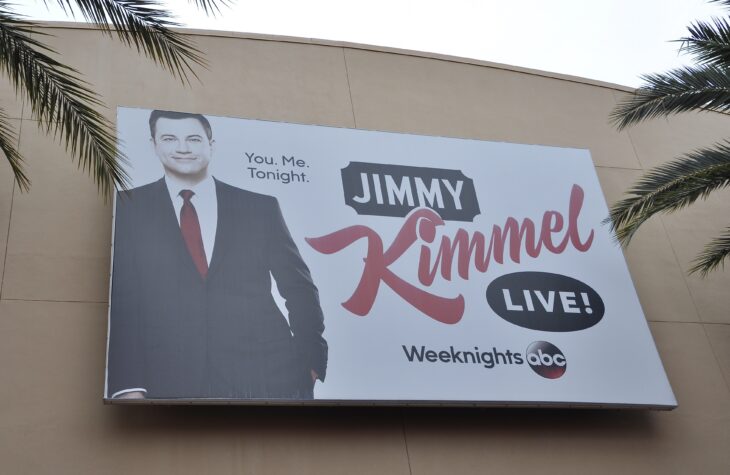
Conservative activist Charlie Kirk was assassinated by a radical left-wing extremist. In the immediate aftermath, late-night host Jimmy Kimmel used his ABC broadcast to suggest that “MAGA Republicans” were trying to spin the politics of Kirk’s killer. His remarks, broadcast on the public airwaves, were criticized as inflammatory lies. Within days, ABC’s parent company Disney and major affiliates Nexstar and Sinclair preempted and then ultimately suspended Kimmel’s show “indefinitely.” Their decision came after FCC Chair Brendan Carr made comments to remind broadcasters that, as licensees of the public spectrum, they are bound by law to serve the public interest and avoid deliberate distortion of the news. Disney eventually made the decision to return the show to the air, acknowledging after “thoughtful conversations” that Kimmel indeed made incendiary and “insensitive” remarks.1
Some have claimed that the FCC Chair’s action was censorship, evidence that government power was being used to silence dissent. That is not the case. Carr did not fine or sanction any station, nor did he revoke a license. He reminded broadcasters of their statutory obligations, and the networks then made their own editorial judgment to suspend Kimmel. Far from an abuse of power, the sequence of events that took place was a necessary and proper step to notify broadcasters of a bad actor who was misleading the public to gain applause and favor in the aftermath of an act of evil.
I. The FCC’s Duty to Safeguard the Public Interest.
Broadcast stations are licensed to use public airwaves. In return, they must serve the “public interest, convenience, and necessity.”2 That obligation includes avoiding “news distortion,” which the FCC defines as the deliberate falsification of the news and the misleading of the public.3 The FCC has a longstanding policy that, if there is evidence of intentional deception, then it can investigate and sanction a licensee.4 So when Jimmy Kimmel, while acting in his professional capacity as a host on a broadcast network, made statements to mislead viewers, the FCC Chair faithfully executed the duties of his office to flag that issue. The Chair did not fine ABC, revoke any licenses, or impose penalties. He reminded stations that the Commission has the authority to investigate and encouraged them to evaluate whether airing such content met their public-interest obligations. That is guidance, not censorship.
The courts recognize this distinction. In Red Lion Broadcasting Co. v. FCC, the Supreme Court upheld the FCC’s ability to require fairness and accuracy in broadcasting, emphasizing the special role of the airwaves and the public’s right to be informed on issues with fair coverage.5 At the same time, the Court has struck down actual attempts at censorship, like in FCC v. League of Women Voters of California, where Congress had barred public broadcasters from editorializing entirely.6 What Carr did here falls squarely in the Red Lion tradition; he reminded licensees of their duty and did not ban speech outright.
In short, Kimmel misled the public while using the privilege of broadcast airwaves. It was not only “OK” but part of the FCC Chair’s job to step in with concern. The First Amendment bars him from silencing dissenting opinions, but it does not bar him from speaking, reminding, and even warning broadcasters about their statutory obligations. Disney and the affiliates then made independent editorial judgments to suspend Kimmel, which they are fully entitled to do under Miami Herald Publishing Co. v. Tornillo, a case wherein the Court affirmed the right of public media editors to control the contents of their publications.7 Additionally, the decision to return the show after the suspension was also within Disney’s Tornillo rights.
II. The Distinction Between Guidance and Coercion.
Critics argue that Carr’s warning amounted to “jawboning”—improper coercion of private actors to suppress speech. But this argument misunderstands both the law and the facts. The Supreme Court has drawn a clear line between persuasion and coercion. In Bantam Books, Inc. v. Sullivan, the Court struck down government censorship that carried informal but implicit threats of prosecution.8 Similarly, in Nat’l Rifle Ass’n v. Vullo, the Court invalidated efforts by New York officials to pressure banks to sever ties with the NRA based on the First Amendment’s barring government officials from wielding power selectively to punish or suppress speech.9
The key difference is that unlawful coercion occurs when government officials use their authority to retaliate against disfavored viewpoints. But it is the Left that has undertaken the retaliatory side of things in an effort to curb the voices of the Right. In 2018, a dozen Democratic Senators wrote to the FCC, urging the agency to investigate Sinclair’s newsroom practices and consider license revocation.10 During the Biden Administration, the progressive Media and Democracy project attempted to have a Philadelphia-based Fox station removed because of its conservative leanings.11 Congressional Democrats blocked the sale of a Miami Spanish-language station to a conservative backer because they feared it would hurt them in the 2022 midterm elections.12 Carr, then serving as the FCC Commissioner, condemned the effort as an attempt to weaponize the licensing process for partisan gain, calling it “a deeply troubling transgression of free speech.”13
Here, Carr reminded broadcasters of their statutory obligations and warned of remedies available under law, but he did not take or threaten enforcement action tied to that viewpoint. Even if Carr had taken action, he would have had to show that Kimmel’s news distortion violated the law. But Carr chose to notify stations only, and his comments fell squarely within the zone of permissible government speech. Carr voiced strong disapproval, but he did not revoke any license, fine any station, or initiate enforcement proceedings. He left the ultimate programming decision to the stations themselves. That is the essence of lawful oversight to have vigorous government speech coupled with respect for private editorial control.
This distinction is especially important when content on the public airwaves risks misleading viewers. Unlike an individual’s private speech on social media, broadcast programming is licensed and entrusted with obligations to the community. When Kimmel, acting in his professional capacity on ABC, presented commentary that affiliates reasonably perceived as misleading, the FCC Chair’s reminder was not censorship—it was precisely the type of oversight Congress intended when it vested the Commission with licensing authority.
III. The Editorial Rights of Broadcasters and Disney.
Far from being victims of censorship, Disney and its affiliates exercised their own First Amendment rights by choosing to suspend Kimmel. The Supreme Court has consistently affirmed that media companies have editorial discretion.14 Similarly, local broadcasters, though subject to FCC oversight, retain the right to determine whether a program serves their audiences. By preempting Kimmel’s show, stations like Nexstar and Sinclair acted within their rights to protect community standards and maintain trust.
Disney’s decision to suspend the program underscores this point. As Kimmel’s employer and as the network distributor, Disney had no constitutional obligation to continue airing speech that risked alienating audiences and undermining credibility. The First Amendment prevents the government from compelling Disney to broadcast Kimmel just as much as it prevents the government from prohibiting it. To frame Disney’s action as censorship is to misunderstand the constitutional doctrine that restrains state action and not corporate discretion.
IV. Why Counterarguments Fail.
The strongest counterargument is that Carr’s remarks carried an implied threat, especially because license renewals and mergers were pending. But courts evaluate coercion contextually. A mere reminder of regulatory standards does not constitute an unlawful threat. Indeed, the FCC would have been derelict in its duty if it had remained silent in the face of public controversy implicating licensees’ obligations. Unlike Bantam Books or Vullo, there is no evidence here that the FCC initiated enforcement proceedings or conditioned regulatory outcomes on compliance. The affiliates acted promptly and independently, which supports the conclusion that they exercised their own judgment rather than succumbing to coercion.
Another counterargument is that political commentary cannot amount to “news distortion” and therefore lies outside FCC authority. While it is true that political opinion is protected speech, the FCC retains authority to investigate if commentary is presented as factual reporting and may mislead the public. Moreover, the mere possibility of inquiry does not itself infringe the First Amendment. Courts have consistently upheld the government’s ability to remind regulated entities of their obligations, so long as actual sanctions are imposed only in accordance with constitutional limits.
Some critics assert that allowing the FCC to speak out creates a “chilling effect” on controversial speech. But the Supreme Court has repeatedly recognized that the First Amendment does not insulate broadcasters or employers from criticism. Just as Kimmel may express sharp views, so too may the FCC Chair and Disney. The marketplace of ideas, even in one with significantly declining ratings, ad revenue, and viewership, functions best when all participants—government, corporations, and individuals—speak freely.15 The mere fact that Disney made its own decision to return the show to the air demonstrates that neither Carr nor the government was coercing or chilling Kimmel’s free speech.
V. Conclusion
The controversy over Jimmy Kimmel’s suspension should not be mistaken for government censorship or authoritarian overreach. Charlie Kirk’s assassination was a matter of grave public concern, and when Kimmel used a licensed broadcast platform to make statements reasonably viewed as misleading about that tragedy, the FCC Chair acted responsibly in reminding broadcasters of their public-interest obligations. Disney and its affiliates, in turn, exercised their lawful editorial discretion by suspending the show and by returning it. The First Amendment protects Kimmel’s right to speak, but it also protects the right of broadcasters and the FCC’s duty to safeguard the integrity of the public airwaves. Far from signaling the collapse of constitutionally protected free speech, actions surrounding Kimmel’s show reaffirm that constitutional governance continues to work.
Endnotes
1. Brian Flood, Disney Announces ‘Jimmy Kimmel Live!’ Returning Tuesday After Suspension, FOX NEWS (Sept. 25, 2024), https://www.foxnews.com/media/disney-announces-jimmy-kimmel-live-returning-tuesday-after-suspension
2. 47 U.S.C. § 309(a).
3. See FED. COMMC’NS COMM’N, The Public and Broadcasting (July 2023), https://www.fcc.gov/media/radio/public-and-broadcasting.
4. Id.
5. 395 U.S. 367 (1969).
6. 468 U.S. 364 (1984).
7. 418 U.S. 241, 258 (1974).
8. 372 U.S. 58, 66–67 (1963).
9. 602 U.S. 175 (2024).
10. Letter from Sens. Maria Cantwell, Edward J. Markey, Richard Blumenthal, Bernie Sanders & Ron Wyden to Ajit Pai, Chairman, Fed. Commc’ns Comm’n (Apr. 11, 2018), https://www.cantwell.senate.gov/imo/media/doc/04112018%20Sinclair%20News%20Distortion%20Letter%20w%20Signatures.pdf.
11. Petition To Deny of the Media & Democracy Project, License Renewal Application for WTXF-TV, File No. 0000212509 (FCC July 3, 2023), https://www.mediaanddemocracyproject.org/_files/ugd/f9547d_d59f128ca09d4106b82930d09c12c94f.pdf.
12. Press Release, FED. COMMC’NS COMM’N, Commissioner Carr Statement on Attempt To Block Sale of Spanish-Language Radio Station in Florida (Apr. 19, 2021), https://docs.fcc.gov/public/attachments/DOC-371715A1.pdf).
13. Id.
14. See Tornillo, 418 U.S. at 258,
15. Eric Revell, Was ‘Jimmy Kimmel Live’ a moneymaker for ABC? The decline of late-night points to no, FOX BUS. (Aug. 17, 2023), https://www.foxbusiness.com/markets/jimmy-kimmel-live-moneymaker-abc-decline-late-night-points-no (showing that late night television, including the Kimmel show, has not turned a profit in several years, with hundreds of millions lost in ad revenue and a 70-80% loss in viewership).
Referenced Documents

Related Posts


Primer: Reducing the Costs of Real Food for Families
The animating concern of this series of primers is the future of healthy family formation. It is a central purpose of government to cultivate a country in which citizens can marry, have children, and remain married. The financial obstacles to that way of life are addressed throughout the series. Here we address rising food costs.