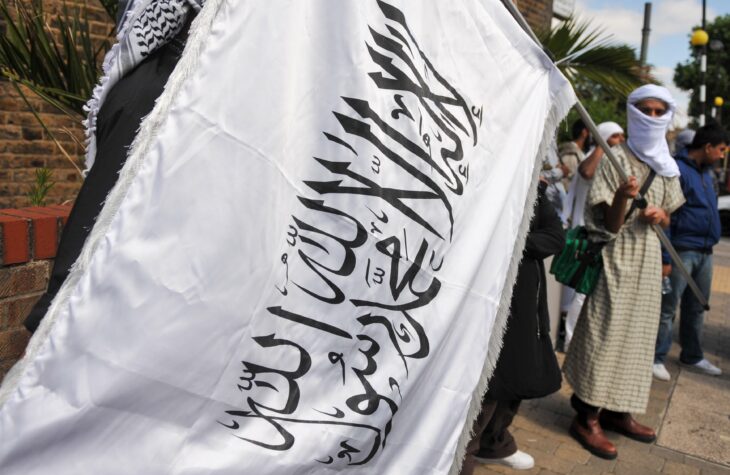
Primer: Twenty-Eight Abominable Practices in Islamic Law
This primer documents twenty-eight practices where the conflict between American constitutional principles and Islamic law is clearest. Each entry pairs the Quran and hadith (the collected sayings of the Prophet Muhammad) with scholarly and institutional sources.
Introduction
In 2009, a man named Faleh Almaleki ran down his daughter Noor with his car after she refused an arranged marriage. Noor died from her injuries. This did not happen in Kabul or Karachi. It happened in Arizona.
Noor’s story is not an isolated tragedy. It is a window into a deeper conflict. The United States of America was founded on the truth that every person is created equal and endowed by God with rights no government may take away. Freedom of conscience, equal protection, and due process all rest on that foundation. Classical Sharia law rests on a different one. It grounds law in the Quran as Muslim jurists interpret it, not in God-given rights held by the individual. These two foundations societies cannot both hold in the same society.
This primer documents twenty-eight practices where the conflict between American constitutional principles and Islamic law is clearest. Each entry pairs the Quran and hadith (the collected sayings of the Prophet Muhammad) with scholarly and institutional sources. Together they show how classical Sharia law defined each practice and how Islamic states and movements still enforce it today. The entries fall into five areas: religious freedom, women and marriage, criminal punishment, religiously justified violence, and political aims.
Synopsis
This primer identifies key practices from the Quran, hadith, and classical Islamic jurisprudence, along with beliefs enforced by specific Islamic states and movements, that fundamentally conflict with the American conception of God-given rights and its biblically backed constitutional commitments to human liberty, equal protection, and due process. As America braces for the rise of the Red-Green Alliance—the unholy union between neo-Marxist progressives and Muslims—the uniquely dangerous precepts embedded within Islam require greater scrutiny. Each entry pairs primary texts, including the Quran and the hadith, with scholarly and institutional sources that document how the practice is applied today.
The glossary format of this primer highlights irreconcilable conflicts between Islam and Western culture in critical areas: the American conception of religious liberty; the Western conception of due process and equal individual worth; the Western conception of the freedom of conscience; and finally the Western conception of the equal status between men and women, particularly in family law. These are the domains where Sharia law most often reaches American courts.1
Islam’s historical embrace of hudud punishments (divinely commanded punishments within the Quran or hadith) in criminal law—which includes amputation of the hand for theft, stoning to death for adultery, and public lashings for consumption of alcohol—also remains on the books in numerous Muslim nation-states. Jihadist groups from the Muslim Brotherhood to Hizb ut-Tahrir and the Islamic State overtly seek Sharia law as a governing order. Yet support for Islamic law within the “mainstream” Muslim population remains staggeringly high, and Muslims in the United States are no exception. A September 2026 survey by Rasmussen Reports and Our Republic found that 75 percent of Muslim respondents in the United States viewed Sharia law favorably, including 48 percent who held a “mostly positive” opinion. Sixty-one percent supported allowing Sharia law to become the legal code for all citizens of a town, city, or state if a majority approved, and 66 percent supported requiring public schools to teach its benefits.2
Sharia law is Islam’s religious and moral framework, drawn from the Quran and the teachings and example (Sunnah) of the Prophet Muhammad. Muslims understand it as divine, totalizing guidance for worship, personal conduct, family relationships, and civil and community life.
This primer also addresses numerous theological elements within Islam that contribute to troublesome cultural patterns that enable or normalize the sexual abuse of non-Muslim girls. Among these patterns are: the doctrine of Muslim supremacy; male dominance over women; forced marriage combined with no fixed minimum age of consent; the view of female sexuality as inherently dangerous, as expressed through the doctrine of fitna; and the historical embrace of slavery within Sharia law.
While the nature of these practices is debated within the Muslim world, the core elements remain prevalent in Muslim-majority populations. The policy question is therefore not what individual Muslims believe but whether the law of the United States—which flows from biblical Christian principles—will permit a despotic anti-Western religious code to eradicate the constitutional rights of American citizens. The constitutional order must remain predicated on a single maxim: one law for one republic.3
Scope and Use
Each entry in the glossary below is grounded in one or more of three source types: primary texts (Quran and hadith), journal articles and scholarly works, and news or institutional reporting. Entries are grouped by category, not ranked. Sunni jurisprudence treats authenticated (sahih) hadith as binding authority second only to the Quran, which itself commands believers to “obey the Messenger.”4 Much of Sharia law’s detailed content, including the penalties for apostasy and stoning, comes from the hadith rather than the Quran.
These practices derive from classical jurisprudence (fiqh) or the laws of particular states and movements; Muslims do not universally hold them, and Muslim jurists and states sometimes disagree sharply on how such doctrines should be practiced. Sources marked “counterpoint” document where intra-Muslim dissent or reform exists. This primer draws heavily on progressive sources such as Amnesty International and Human Rights Watch to show that Islam’s practices are a bridge too far even for these groups, although leftists continue to build a common political cause to overturn the constitutional order by forging the Red-Green Alliance.
Women and Children
1. Child Abuse
The major schools of Islamic jurisprudence agree that a father could arrange a marriage for his prepubescent son or daughter without the child’s consent.5 They justify this position through the example of Muhammad’s marriage to Aisha. Hadith state that Aisha married Muhammad at age six and consummated the marriage at age nine. Child marriage is also justified by the actions of Muhammad’s companions and passages in the Quran, particularly Surah 65:4. The Maliki and Shafi‘i schools also allow a father to marry off his daughter without her consent after she has reached puberty, provided she is still a virgin, despite hadith evidence indicating otherwise.6 The Maliki and Shafi‘i schools are two of the four major types of Sunni jurisprudence, alongside the Hanafi and Hanbali. Each developed a systematic method for deriving Islamic law (fiqh) from its sources, and Muslims in many regions still use these methods to guide worship and everyday conduct.7
Consummation generally depended on the family’s judgment that the girl could physically endure intercourse without harm, rather than on a fixed age. The jurist Ahmad ibn Hanbal,8 however, specified the age of nine, following the example of Aisha’s age when her marriage to Muhammad was consummated.9 In Yemen, the absence of a minimum marriage age has led to documented abuse of girls,10 and comparative research tracks how minimum-age laws vary around the world.11
Bacha bazi, which literally means “boy play,” has long persisted in Afghanistan’s Islamic tradition. It is the sexual exploitation and enslavement of boys (bachas) by powerful men, including warlords, militia commanders, police officials, and wealthy merchants.12 Most victims are poor or orphaned boys in early adolescence, and some are as young as age ten. Some are taken off the street, and others are bought from destitute families. Dressed in women’s clothing, with makeup and bells on their feet, the boys are forced to dance at all-male gatherings. Afterward, they are often sold or passed among the guests for sex, and some are gang-raped.13 In northern Afghanistan, keeping a dancing boy has long been a sign of status and power.
American and allied troops saw the practice up close. In his last phone call home before he was killed on his base in 2012, Lance Corporal Gregory Buckley Jr. told his father, “At night we can hear them [the bachas] screaming, but we’re not allowed to do anything about it.” His father told reporters that his son’s officers had told him to look the other way because “it’s their culture.”14 Captain Dan Quinn, a U.S. Special Forces captain, was relieved of his command after he beat an American-backed Afghan militia commander who kept a boy chained to his bed as a sex slave.15 Reports in The New York Times and research in the U.S. Army War College’s journal Parameters document the lasting emotional harm to soldiers who were told not to step in. Many describe moral injury, guilt, and psychological trauma from watching children abused by the very partners they had been sent to train and fight alongside.16
On June 16, 2026, Britain’s Rape Gang Inquiry published its report on what it called “the systematic targeting of vulnerable girls, overwhelmingly White British, by predominantly Muslim Pakistani gangs.” The authors said the inquiry was formed because the authorities, leftist politicians, and civil service “failed to act.” The report concluded that due to political cowardice and complicity “at the very least, 250,000 young white girls” suffered “repeated rape, gang rape, trafficking, torture, pregnancy, forced Islamic conversion, and lifelong trauma” over the course of 33 years. Horrific crimes such as these had been committed since the 1950s in every region of the United Kingdom.17
2. Male Guardianship
Male guardianship (wilayah, or qiwamah within marriage) is a living legal system, not just a classical Sharia doctrine.18 Saudi Arabia shows this most clearly. Until 2019, adult Saudi women needed a male guardian’s permission to get a passport or leave the country. The 2019 decree let women over age twenty-one apply for a passport and travel on their own. Other parts of the system stayed in place, however, including the requirement of a man’s consent to marry.19 The kingdom’s 2022 Personal Status Law, its first codified family law, requires a male guardian to contract a woman’s marriage regardless of her age or prior marital status. It also requires wives to “obey” their husbands “in a reasonable manner.”20
Similar rules limit women’s movement across the region. In Qatar, unmarried women under age twenty-five must have a male guardian’s permission to travel abroad; Qatari men can travel freely from age eighteen. Guardians can also ask a court to ban a female relative or wife from traveling.21 In Iran, married women need their husband’s permission to get a passport and to travel. Authorities in Gaza, Saudi Arabia, and Yemen also permit male guardians to ban women from traveling abroad. Fifteen countries in the region still have family laws that require wives to obey their husbands, live with them, or obtain permission to leave the home, work, or travel.22
These laws rest on recognizable textual foundations, some more incompatible with the West than others:
- Male Authority in the Household: The Quran states that “men are the caretakers of women, as men have been provisioned by Allah over women and tasked with supporting them financially” (Surah 4:34). It also says women “have rights similar to those of men equitably, although men have a degree ˹of responsibility˺ above them” (Surah 2:228).
- Guardian Consent for Marriage: One hadith says, “There is no marriage without the permission of a guardian.”23 Another says, “Whichever woman married without the permission of her Wali her marriage is invalid, her marriage is invalid, her marriage is invalid.”24
- Travel with a Male Relative (Mahram): One hadith says, “It is not permissible for a woman who believes in Allah and the Last Day to travel for one day and night except with a Mahram.” Another says, “The woman should not undertake journey except with a Mahram.”25
- Male Permission at Home: A wife may not fast voluntarily “without the permission of her husband when he is at home” or “allow anyone to enter his house except with his permission.”26
3. Polygyny and Cousin Marriage
Surah 4:3 permits a man up to four wives, provided he treats them justly.27 Although the practice is mostly concentrated in certain regions, it continues throughout swaths of the Muslim world.28 It is most common in West Africa’s “polygamy belt.” There, roughly a quarter of sub-Saharan Muslims live in polygamous households, including four in ten Nigerian Muslims, and twelve northern Nigerian states recognize plural marriage under Sharia law.29 The practice extends well beyond Africa. In Saudi Arabia, 3 percent of men report having more than one wife.30 Indonesian courts approved 967 polygamy petitions in 2023.31 Even legal bans have not ended the practice. Turkey outlawed polygamy in 1926, yet an estimated 186,000 Turkish women share a husband.32 In Britain, religious-only nikah ceremonies let men take additional wives outside civil law.33
Marriage between first cousins is permissible under Islamic jurisprudence because it is not listed among the prohibited degrees of kinship in Surah An-Nisa (4:23). Medical research indicates that a single first-cousin marriage carries an elevated risk of genetic disorders or congenital defects compared to unrelated unions.34 First-cousin marriages are also associated with a decrease in offspring’s IQ and a higher risk of intellectual disability or cognitive impairment in children.35
4. Unilateral Divorce and Triple Talaq
India’s Supreme Court struck down instant triple talaq36 in Shayara Bano v. Union of India (2017),37 a ruling that exposed unresolved tensions between personal law and constitutional equality.38 Classical Sharia law grants men unilateral divorce, but women must seek judicial divorce.39
5. Wife Discipline
Surah 4:34 is traditionally read to permit a husband to strike a disobedient wife.40 The progressive professor Ayesha Chaudhry famously twisted herself into knots to trace how premodern jurists and exegetes treated this verse,41 but the practice continues: The UAE’s Federal Supreme Court issued an opinion in 2010 that allows husbands to physically “discipline” wives within set limits.42 Nadya Khalife, a journalist with Human Rights Watch, reports that “the UAE’s highest court is evidence that the authorities consider violence against women and children to be completely acceptable.”43
6. Nonrecognition of Marital Rape
Classical Sharia jurists treat marriage as a contract that exchanges the husband’s financial support for the wife’s sexual availability.44 They read Surah 2:223 (“go to your tilth when or how you will”) and 4:34 as support for this view.45 Hadith reinforce it: Angels curse a wife who refuses her husband’s bed, and she must answer his call “even if she is at the oven.”46 Kecia Ali shows that under this ownership-based model, a husband could legally rape his wife.47 That legacy persists. In 2024, Morocco’s Court of Cassation overturned the country’s first marital rape conviction, issued in 2019 by the Tangier Court of Appeal.48
7. Interfaith Marriage
Classical Islamic law lets a Muslim man marry a Jewish or Christian woman but bars a Muslim woman from marrying a non-Muslim man.49 When a mixed marriage is treated as invalid, the children lose their legal tie to the father, along with any inheritance from him, and even in a valid marriage the spouses cannot inherit from each other.50
8. Unequal Inheritance
Surah 4:11 gives a son the share of two daughters,51 and Muhammad ordered that the shares fixed in the Quran be paid out first, with whatever remained going to “the closest male relative of the deceased.”52 When Tunisia’s President Beji Caid Essebsi proposed equal inheritance in August 2018, the Ennahda Party’s Shura Council rejected the proposal because it contradicted “peremptory texts in the Quran and Sunna.” The cabinet approved the bill that November. It then sat in parliament, with Ennahda strongly opposed,53 and was dropped after Essebsi died in 2019.54
9. Unequal Testimony and Blood Money
In Islamic law, blood money (diya) is a payment made to a victim or to the victim’s heirs for an unlawful killing, an accidental death, or a physical injury. It is an alternative to qisas (punishment equal to the harm done) and to private revenge. Classical Sharia law values women and men differently.55 Quran 2:282 requires two women to stand in for one male witness to a financial contract.56 Iran’s penal code still sets a woman’s diya at half a man’s, although a state fund now pays the difference.57
10. Custody Rules Favoring Fathers
Religious personal status laws in Lebanon routinely disadvantage mothers in custody,58 reflecting premodern juristic rules that transfer custody by age and on the mother’s remarriage.59
11. State-Enforced Veiling and Restrictions on Women’s Public Life
In March 2024, a UN fact-finding mission concluded that Iran bears responsibility for the “physical violence” that killed Mahsa Amini after her arrest by the morality police for allegedly violating hijab rules, and later found that Iran’s enforcement of mandatory veiling amounts to gender persecution.60 In Afghanistan, the Taliban—citing Sharia law—has issued more than one hundred decrees that, in UNESCO’s words, have “erased” women “from public life.”61 In October 2026, the International Criminal Court unsealed arrest warrants for the Taliban’s supreme leader and chief justice on charges of gender persecution, and a coalition of Afghan and Iranian women, human rights organizations, and at least fourteen governments is now pressing to codify “gender apartheid” as an international crime.62
Religious Freedom and Conscience
12. Death Penalty for Apostasy
The classical Sharia position across the major Sunni schools supporting the death penalty for apostasy rests on hadith such as “whoever changes his religion, kill him.”63 Apostasy remains a criminal offense in a number of jurisdictions, some of which retain capital punishment,64 and laws penalizing apostasy are part of a broader global pattern of religious restriction.65
13. Blasphemy Laws
Blasphemy laws in a number of Muslim-majority states fall far short of even secular progressive human rights standards.66 In Pakistan, for example, blasphemy laws are frequently used against religious minorities, as the case of Asia Bibi illustrates.67 Bibi is a Pakistani Christian woman whose case became an international symbol of religious persecution. She was accused of insulting Muhammad after a dispute with Muslim coworkers in 2009 over her drinking from a communal cup. Bibi was sentenced to death under Pakistan’s blasphemy law but later acquitted.68
The norm these laws encode depends on state enforcement and does not stop at national borders. On January 7, 2015, Muslim terrorists stormed the Paris offices of Charlie Hebdo, a satire magazine that had published caricatures of the Prophet Muhammad, and murdered eleven people, including five cartoonists and a police officer outside the building. Over the next two days, an accomplice killed a policewoman and four people at a kosher supermarket, bringing the death toll to seventeen.69 When the magazine reprinted the cartoons in September 2020 to mark the start of the attackers’ trial, the move sparked protests in several Muslim countries. The next month, Samuel Paty, a teacher, was murdered near his school days after showing some of the cartoons in a class on free speech.70 Legal bans on blasphemy prosecution do not stop extralegal punishment, such as mob violence, threats, and ostracism.
14. Dhimmi Status and the Jizya
Dhimmi status is a historical legal category in traditional Islamic law that grants a second-class status to non-Muslims living under Muslim rule. Surah 9:29 commands fighting Jews, Christians, and polytheists until they pay the jizya (a yearly tax that non-Muslim subjects living under an Islamic state pay to the government) “while they are subdued,” as classical Sharia commentary explains.71 The Pact of Umar sets out restrictive conditions for protected non-Muslims,72 a framework of subordinate legal status summarized in standard reference works.73
15. Restrictions on Non-Muslim Worship and Conversion
The Pact of Umar draws on hadith from both Muwatta Malik and Sahih al-Bukhari, which are are two of the most foundational and revered collections of Hadith, to strictly forbid public displays of the cross, the construction of churches, and any public expression of Christianity under Muslim rule.74 The Islamic scholar Qayyim al-Jawziyya (whose followers and intellectual heirs include mainstream Sunni scholars of his era and modern traditional movements) wrote that it is mandatory for the imam (Muslim ruler) to prevent public displays of the cross from Christians, blowing of the shofar for Jews, and public expressions of faith from Jews and Christians under Muslim rule, and added that severe punishment must be inflicted on any non-Muslim who violates these laws.75 Following this direction, Saudi Arabia prohibits public non-Muslim worship,76 Egypt restricts church construction and repair,77 and Malaysia’s courts famously refused to let Lina Joy, a Malaysian woman of Malay-Javanese descent whose conversion from Islam to Christianity became the focus of a landmark constitutional case concerning religious freedom and apostasy in Malaysia. She was baptized as a Christian in 1998, have the word “Islam” removed from her official National Registration Identity Card.78
16. Takfir
Takfir is the Islamic doctrine of excommunication: declaring a fellow Muslim a disbeliever (kafir) or apostate (murtadd), a status punishable by death.79 In the hands of modern Muslims, it has become a license to kill. Even Abdullah Azzam, a founding figure of global jihad and mentor to Osama bin Laden, recognized that indiscriminate takfir could divide Muslims and undermine their pursuit of conquest. Other Islamic and jihadist leaders did not share Azzam’s restraint. The former al-Qaeda leader Ayman al-Zawahiri declared Muslim governments, their security forces, and all Shia Muslims apostates. Abu Mus’ab al-Zarqawi, who founded Al-Qaeda in Iraq (AQI), a group that later evolved into the Islamic State (ISIS), added Sunni politicians, police, and anyone who defied his version of Sharia law. In Algeria, Djamel Zitouni’s Armed Islamic Group declared the entire nation apostate and massacred civilians accordingly. Zarqawi’s network in Iraq became the forerunner of the Islamic State, where takfir became doctrine.80
17. Jihad
A significant stream of Muslim thought supplies a doctrinal basis for armed expansion.81 Islam expanded in its earliest days primarily through conquest and warfare, a practice that has not abated in the centuries since. Its proponents point to Quranic commands to “fight those who do not believe in Allah . . . until they pay the tax, willingly submitting, fully humbled.”82 Related verses include Surah 9:5, 8:39, 9:123, and 2:216.83 They also cite canonical hadith. In one, Muhammad says, “I have been ordered (by Allah) to fight against the people until they testify that none has the right to be worshipped but Allah.”84 In another, he tells his commanders to offer enemies three choices: Islam, the jizya tax, or war.85 Elsewhere, Muhammad declares that “paradise is under the shades of swords.”86 The Islamic State promoted this apocalyptic theme extensively in its propaganda magazine Dabiq, named after the Syrian town identified in a hadith as the site of an end-times battle with “the Romans.” Its broader publishing network included Rumiyah, Al-Naba, and Dar al-Islam. Across its propaganda, ISIS used selective interpretations of Qur’anic verses and apocalyptic prophecies to claim religious legitimacy for global militant jihad. Al-Qaeda in the Arabian Peninsula’s magazine Inspire similarly invoked religious authority to justify terrorist violence. In Dabiq and Rumiyah, Qur’an 9:5 and 8:39 were the most frequently cited warfare-related verses. ISIS used these passages, often stripped of their surrounding context, to justify and encourage violence.
In 2013, the Pew Research Center found alarming data in Muslim countries with regard to suicide bombings. For example, in a few countries, substantial minorities said suicide bombing “often or sometimes justified.” This includes 39 percent of people in Afghanistan, roughly 40 percent in the Palestinian territories, 29 percent in Egypt, and 26 percent in Bangladesh.87 Meanwhile, Gallup reported in 2011 that 18 percent of Muslims believe military attacks on civilians are justified and that 14 percent believe individual attacks on civilians are justified.88 Based on worldwide estimates, this translates to 140 million to 180 million Muslims supporting some form of active, violent expansion of Islam.
Criminal Law and Punishment
18. Hudud Corporal Punishments
In Islamic law, hudud (singular hadd, “limit”) are crimes whose punishments Allah has fixed in the Quran or Sunnah, and no human authority can waive, reduce, or increase them.89 Jurists agree on four: unlawful sexual relations, false accusation of unchastity, theft, and highway robbery. Some schools add drinking alcohol, apostasy, and rebellion.90 Surah 5:38 prescribes cutting off a thief’s hand. Classical Sharia jurists required that the stolen goods exceed a minimum value and be taken by stealth from secure custody.91 In Islamic law, taken by stealth means the thief took the property secretly, without the owner or guardian knowing or seeing it happen. Because hudud were to be “averted by the slightest doubts,” they have historically been carried out only in cases where proof was beyond doubt.92
Yet hudud are still law today. Saudi Arabia amputates the right hand for theft and imposes “cross amputation” (right hand and left foot) for highway robbery, based on Surah 5:38.93 In 2011, a Riyadh court sentenced six men to cross amputation after trials without legal counsel. The king later commuted the sentences. On April 3, 2019, Brunei brought its Syariah Penal Code fully into force, prescribing stoning for adultery and sodomy and amputation for theft.94 After a global outcry, the sultan extended a long-standing moratorium on executions to the code, but amputation and flogging remain on the books.
19. Stoning for Adultery
The Quran prescribes one hundred lashes for unlawful sex (24:2).95 The hadith Sahih Muslim, however, records that Umar ibn al-Khattab, the second caliph, preached from the Muhammad’s pulpit that “the verse of stoning was included in what was sent down” to the prophet. According to Umar, Muhammad stoned married adulterers, and his successors did the same.96 Umar feared people would one day say, “We do not find the punishment of stoning in the Book of Allah” and abandon “this duty prescribed by Allah.” He declared stoning binding on married adulterers “when proof is established, or there is pregnancy, or a confession.”97 Because no such verse appears in the compiled Quran, stoning rests chiefly on this hadith and on Muhammad’s practice.
Modern states have enforced it. Iran’s penal code made stoning mandatory for “adultery while married” and specified that the stones should “not be large enough to kill the person by one or two strikes.” 98 Despite a 2002 moratorium on stonings in the country, Ja’far Kiani was stoned to death in Qazvin Province in July 2007. Iran’s judiciary confirmed two more stonings in December 2008.99 Brunei’s Syariah Penal Code, in force since 2019, prescribes stoning for adultery and sodomy, but a moratorium on executions has kept that penalty from being carried out.100
20. Criminalization of Homosexuality
While homosexuality is considered a sin against God in both Judaism and Christianity, biblical precepts do not call for the death penalty for same-sex acts. Homosexuality is currently illegal in thirty-five Muslim-majority countries. ILGA World documents that numerous Muslim states criminalize homosexuality with the death penalty.101 Brunei’s code made stoning a possible penalty for gay sex,102 drawing scrutiny at its UN human rights review.103 The NBC News reporter Cassandra Vinograd writes, “ISIS has released images that appear to show gay men being hurled off buildings and then stoned to death, part of the militants’ self-professed mission to crack down on ‘sexual deviance.’ The horrific execution tactic is the latest in a string of brutal punishment methods applied by ISIS under its strict interpretation of Islamic—or shariah—law, from crucifying Christians to stoning alleged adulterers to flogging young men for drinking.”104 ISIS drew this method from a particular interpretation of classical Islamic jurisprudence. It cited hadith in which early companions debated punishments for homosexual acts, including throwing someone from a high place.
Countries such as Iran, Saudi Arabia, Yemen, and Mauritania prescribe the death penalty for same-sex activity under legal systems based on classical Sharia law. The legally prescribed methods vary and include hanging, stoning, or firing squad, subject to judicial procedures, rather than throwing people from buildings.
21. Rape Evidence Standards and Zina Prosecutions
In Islamic law, zina is unlawful sexual intercourse. It covers both fornication and adultery.105 The Quran prescribes “one hundred lashes” for “female and male fornicators.” (24:2). The Prophet Muhammad added that married offenders “shall receive one hundred lashes and be stoned to death.” (Sahih Muslim 1690a).² The bar for proof is deliberately high and leaves victims vulnerable. The Quran requires “four witnesses” to establish illicit intercourse (4:15), and anyone who accuses a chaste woman without them receives “eighty lashes.”106
Pakistan’s 1979 Zina Ordinance brought rape (zina bil-jabr) into this framework. To prove rape for the hadd penalty, a victim needed four adult Muslim male eyewitnesses to the act of penetration, and a woman’s testimony carried no legal weight.107 If a victim could not meet that standard, her complaint could become evidence against her. Safia Bibi, a blind, unmarried woman, became pregnant after a rape and was jailed and sentenced to fifteen lashes for zina, while the man she accused was acquitted.108 Human Rights Watch reported that the laws “led to thousands of women being imprisoned.”109
22. Family Pardon for Killers
The Quran allows a murder victim’s guardian to pardon the killer and accept “blood-money.”110 The Prophet Muhammad confirmed that the heirs may choose either “blood money or retaliation.”111 When the killer and the heirs belong to the same family, this invites impunity. In 2022, despite Pakistan’s 2016 honor-killing reform, a Pakistani court acquitted Qandeel Baloch’s brother, who had confessed to killing her, after their parents pardoned him.112 Iran adds an exemption based on hadith teachings that “the father does not suffer retaliation” for killing his child.113 In Iran in 2020, a fourteen-year-old named Romina Ashrafi was beheaded by her father, who received only nine years in prison instead of the death penalty for killing his daughter.114
Violence and Religiously Justified Cultural Practices
23. Sexual Slavery and Concubinage
Classical Islamic law encourages Muslims to take non-Muslim women captive in war and to have sex with “captives in your possession.”115 The hadith Sahih Muslim connects this permission to the Battle of Awtas, after which Muhammad’s companions were permitted to take women captive once the women’s waiting period to determine that they were not already pregnant had ended.116 Historians estimate that 11 million to 17 million Africans were enslaved through the trans-Saharan, Red Sea, and Indian Ocean trades between 650 and 1900. In 2014, the Islamic State enslaved roughly seven thousand Yazidi women and girls and called captives “merely property.”117
24. Honor Killings
Amnesty International reports that the number of women killed for family “honor” “runs into the thousands worldwide,” and nongovernmental organizations estimate as many as twenty thousand per year.118 In Pakistan, the Human Rights Commission recorded at least 405 honor killings in 2024, yet convictions hover near 0.5 percent.119 As noted above, in Arizona in 2009, Faleh Almaleki fatally ran over his daughter Noor for refusing an arranged marriage. He received 34.5 years in prison on combined charges.120 According to Amnesty International, such crimes are “rooted in a global culture of discrimination against women,” who are treated as “objects and commodities.” 121
25. Female Genital Mutilation
UNICEF estimates that more than 230 million girls and women alive today have undergone female genital mutilation (FGM).122 While the practice predates Islam and crosses religious lines, some Shafi‘i jurists treat it as obligatory or recommended,123 and it remains contested in Egypt despite opposition from some Muslim scholars at Al-Azhar University in Cairo.124 In April 2017, federal prosecutors charged Michigan physician Jumana Nagarwala, a Muslim physician practicing in Michigan, with performing FGM on girls approximately six to eight years old. NPR’s Merrit Kennedy reported, “The children were told it was a ‘special’ girls trip,’ according to court documents. The first victim told federal agents that she underwent a procedure ‘to get the germs out’ of her, and she identified Nagarwala in a photograph as the doctor who performed the operation.”125 She added that a “victim who described her ordeal in the complaint said she screamed as Nagarwala gave her a ‘shot’ that ‘hurt really badly.’ The girl said she could ‘barely walk’ after the procedure, and that her parents ‘told her that the procedure is a secret and that she is not supposed to talk about it.’”126 Government prosecutors estimate that Nagarwala has performed genital mutilation on at least one hundred minors.127
Deception, Dress, and Political Aims
26. Taqiyya and Permitted Deception
Taqiyya is the Islamic practice of deception. Muslims are encouraged to conceal their faith or forgo religious duties in order to deliberately deceive others.128 It rests on Surah 16:106, which excuses one who denies Islam under compulsion while his heart remains firm, and Surah 3:28, which permits “precaution” toward disbelievers.129 Hadith hold that “war is deceit” and permit lying in three cases: war, reconciliation between people, and interactions between spouses. Muhammad also disguised the destination of his raids. When Muhammad ibn Maslama, a prominent companion of the Islamic prophet Muhammad who served as a senior military commander and trusted official during the early Rashidun Caliphate,
asked to leave “to say a (false) thing” to lure Ka’b ibn al-Ashraf,a prominent leader and poet of the Jewish Banu Nadir tribe in Medina, to his death, Muhammad replied, “You may say it.”130 Taqiyya, in practice, licenses deceiving non-Muslims.131
27. Head Coverings for Women and Girls
Surah 24:31 instructs believing women to draw their coverings (khumur) over their chests,132 and Surah 33:59 tells Muhammad’s wives, daughters, and believing women to draw their outer garments over themselves.133 Iran has made the hijab compulsory for girls from age nine since 1981,134 and its 2024 hijab law intensified enforcement.135 In December 2025, Austria banned headscarves in schools for girls under age fourteen after its Constitutional Court struck down an earlier under-ten ban as discriminatory.136 Some research on Muslim girls who wear hijab disputes claims that it sexualizes children.137
28. Universal Sharia Law and the Caliphate Project
The Quran declares that Allah sent the Prophet Muhammad “with the religion of truth, making it prevail over all others.”138 It commands believers to fight “until . . . devotion will be entirely to Allah,” and to fight the People of the Book (Jews and Christians) “until they pay the tax” and are “fully humbled.”139 Muhammad said, “I have been ordered to fight against the people until they testify” to Islam and foretold that “the dominion of my Ummah would reach” the ends of the earth.140 Classical Sharia jurists divided the world into dar al-Islam (House of Islam) and dar al-Harb (House of War). Majid Khadduri, an Iraqi academic, concluded that “the dar al-Islam is permanently under jihad obligation until the dar al-harb is reduced to nonexistence.”141
Modern movements revived this vision. Hassan al-Banna, founder of the Muslim Brotherhood, made “mastership of the world” (ustadhiyyat al-‘alam) the Muslim Brotherhood’s final goal, which Sa’id Hawwa, Saʽid Hawwa was a prominent Syrian Hanafi scholar, a leading member and ideologue of the Syrian Muslim Brotherhood, and a symbol of resistance to Hafez al-Assad’s regime, read as subjugating “the entire world to Allah’s word.”142 Hizb ut-Tahrir, which is a is an international fundamentalist political organization that seeks to unite Muslims worldwide under a restored Islamic caliphate governed by a strict interpretation of Sharia law, seeks a caliphate that would eventually overthrow non-Muslim regimes,143 and the Islamic State declared a caliphate in June 2014.144 A 1991 Muslim Brotherhood memorandum entered in the Holy Land Foundation trial145 called its American work “a kind of grand Jihad in eliminating and destroying the Western civilization from within,” though researchers dispute whether this plan was actually adopted.146 Large majorities of Muslims in many countries favor Sharia as official law. A 2013 Pew Research poll found that in Egypt, 55 percent want it applied to all citizens, though many supporters elsewhere would limit it to Muslims.147
Conclusion
The question before Americans is not what individual Muslims believe. The question is whether any legal order can supersede the biblically ordered constitutional rights of American citizens on American soil.
The record is sobering. Under Islamic rule, apostasy can bring death, and blasphemy laws are routinely used against minorities. Non-Muslims are specifically granted a lesser legal status, and women are customarily denied equal standing in marriage, divorce, custody, and inheritance. A wide range of Islamic movements, from the Muslim Brotherhood to Hizb ut-Tahrir and the Islamic State, openly impose Sharia law as a totalizing governing order. These Muslim doctrines and movements are incompatible with Western understandings of human liberty, equal protection, and due process.
The looming danger is that America will not address the problem until it is firmly entrenched. Foreign religious rules such as Sharia law already influence courts across the United States, particularly through family law, where women and children bear the cost. Enclaves of Sharia law have emerged from Dearborn, Michigan, to the suburbs of Dallas, Texas. A republic that does not defend its own values will see them erode quietly, then suddenly and violently collapse
The threat of Islam must be addressed honestly, and practices that jeopardize the constitutional order and the God-given rights recognized within it cannot be excused. The United States has always protected freedom of religion, properly understood, and has never allowed any ideological or religious creed to unilaterally rule over its citizens’ consciences. Ours is a nation grounded in a Christian ethos that recognizes one law for one republic. Americans must defend that truth—now more than ever.
Endnotes
1. “Sharia,” Britannica.com, November 5, 2026, https://www.britannica.com/topic/sharia.
2. “Sharia Law in the US Is Supported by 75% of Muslims, 41% of Atheists and up to 20% of Christians,” Percepcions de l’Islam, October 5, 2026, https://percepcions.cat/en/sharia-law-in-the-usa-is-supported-by-75-of-muslims-41-of-atheists-and-up-to-20-of-christians/.
3. This maxim is not a claim that civil law outranks the law of God. Jesus distinguished what is owed to Caesar from what is owed to God (Matthew 22:21), and Paul taught that civil authority is instituted by God to restrain wrongdoing (Romans 13:1–4). The American founding drew on that inheritance: The Declaration of Independence locates unalienable rights in the Creator rather than the state, and the First Amendment bars any establishment of religion. Christianity, in other words, does not offer a rival code of religious law to be enforced alongside or above the Constitution, as classical Sharia law does. The concern of this primer is a competing legal order, not religious conviction as such. See the Declaration of Independence and U.S. Constitution, amend.
4. Surah 4:59, trans. Mustafa Khattab, The Clear Quran, Quran.com, https://quran.com/an-nisa/59.
5. Oğuzhan Tan, “Childhood and Child Marriage in Islamic Law,” Cumhuriyet İlahiyat Dergisi 22, no. 2 (2018): 783–805, https://dergipark.org.tr/en/pub/cuid/article/453039.
6. Bukhari 5133 and 3894, Muslim 1422, and Nasa’i 3255 report that Aisha married Muhammad at six and the marriage was consummated at nine; Bukhari’s and Muslim’s chapter titles; Bukhari’s use of Q 65:4 in his heading; companion reports about Ali, Zubayr, and Abu Bakr; and consensus statements from al-Muhallab, Ibn al-Mundhir, and al-Baghawi are what jurists used to allow a father to marry off a prepubescent child.
7. “Legal Traditions,” Judiciaries Worldwide, accessed November 10, 2026,
8. Ahmad ibn Hanbal (780–855 CE) was a Baghdad-born theologian, jurist, and hadith scholar whose name is attached to the Hanbali school, the most textually conservative of the four major Sunni legal traditions. He compiled the Musnad, one of the largest and most influential collections of hadith, the reported sayings and practices of the Prophet Muhammad. The Musnad is arranged by the companion who transmitted each report and holds roughly thirty thousand to forty thousand narrations, depending on how repeated reports are counted. Ibn Hanbal grounded legal reasoning first in the Quran and the hadith, and he was wary of speculative theology (kalam) and rational argument that moved beyond the texts.
9. Sahih al-Bukhari 5134, Book of Wedlock (Nikaah), Sunnah.com, https://sunnah.com/bukhari:5134.
10. Human Rights Watch, “Yemen: Child Marriage Spurs Abuse of Girls and Women,” news release, December 8, 2011, https://www.hrw.org/news/2011/12/08/yemen-child-marriage-spurs-abuse-girls-and-women.
11. Megan Arthur et al., “Child Marriage Laws Around the World: Minimum Marriage Age, Legal Exceptions, and Gender Disparities,” Journal of Women, Politics and Policy 39, no. 1 (2018): 51–74, https://pmc.ncbi.nlm.nih.gov/articles/PMC6382347/.
12. Rustam Qobil, “The Sexually Abused Dancing Boys of Afghanistan,” BBC, September 8, 2010, https://www.bbc.com/news/world-south-asia-11217772.
13. “Afghan ‘Dancing Boys’ Tell of Rape, Abuse,” Radio Free Europe, January 25, 2016, https://www.rferl.org/a/afghan-dancing-boys/27510265.html.
14. Joeseph Goldstein, “US Troops Told to Disregard Afghan Allies’ Pedophilia,” Boston Globe, September 20, 2015, https://www.bostonglobe.com/news/world/2015/09/20/soldiers-told-ignore-afghan-allies-abuse-boys/DN8iDGPVqHGIZw39w4ZW9L/story.html.
15. Sara Obeidat, “Before Systems Change, Someone Has to Expose Them,” PBS, September 21, 2015, https://www.pbs.org/wgbh/frontline/article/military-overlooked-sexual-abuse-by-afghan-allies-investigation-says/.
16. Caroline Kennedy-Pipe and Martin Thorp, “Soldiering and Silences: Witnessing Child Sexual Abuse in
17. George Fishman, “UK Rape Gangs: Could It Happen Here?” Center for Immigration Studies, August 26, 2026, https://cis.org/Fishman/UK-Rape-Gangs-Could-It-Happen-Here.
18. Kristine Beckerle, Boxed In: Women and Saudi Arabia’s Male Guardianship System (Human Rights Watch, 2016), https://www.hrw.org/report/2016/07/17/boxed/women-and-saudi-arabias-male-guardianship-system.
19. “Saudi Arabia Allows Women to Travel Independently,” BBC News, August 2, 2019, https://www.bbc.com/news/world-middle-east-49201019.
20. “Saudi Arabia: Law Enshrines Male Guardianship,” Human Rights Watch, March 8, 2023, https://www.hrw.org/news/2023/03/08/saudi-arabia-law-enshrines-male-guardianship.
21. “World Report 2026: Qatar,” Human Rights Watch, accessed November 10, 2026, https://www.hrw.org/world-report/2026/country-chapters/qatar. See also Human Rights Watch, “Qatar: Male Guardianship Severely Curtails Women’s Rights,” news release, March 29, 2021, https://www.hrw.org/news/2021/03/29/qatar-male-guardianship-severely-curtails-womens-rights.
22. Andrew Stroehlein, “When You’re an Adult but Don’t Control Your Life,” Human Rights Watch Daily Brief, July 18, 2023, https://www.hrw.org/the-day-in-human-rights/2023/07/18.
23. Sunan Abi Dawud 2085, graded sahih (authentic) by al-Albani, Sunnah.com, https://sunnah.com/abudawud:2085.
24. Jami’ at-Tirmidhi 1102, graded hasan (good) by Darussalam, Sunnah.com, https://sunnah.com/tirmidhi:1102.
25. Sahih Muslim 1341a, Sunnah.com, https://sunnah.com/muslim:1341a.
26. Sahih al-Bukhari 5195, Sunnah.com, https://sunnah.com/bukhari:5195.
27. Surah 4:3, Quran.com, https://quran.com/an-nisa/3.
28. Stephanie Kramer, “Polygamy Is Rare Around the World and Mostly Confined to a Few Regions,” Pew Research Center, December 7, 2020, https://www.pewresearch.org/short-reads/2020/12/07/polygamy-is-rare-around-the-world-and-mostly-confined-to-a-few-regions/.
29. Pew Research Center, “Household Patterns by Region,” in Pew Research Center, Religion and Living Arrangements Around the World (Pew Research Center, December 12, 2019), https://www.pewresearch.org/religion/2019/12/12/household-patterns-by-region/.
30. Saudi Ministry of Health, Maternal Health and Child Immunization (Saudi Arabia Ministry of Health, 2019), 6, https://www.moh.gov.sa/en/Ministry/Statistics/Indicator/Documents/Maternal-Health-Child-Immunization.pdf.
31. “Reconstructing Polygamy Regulation Through Comparative Legal Systems,” Justicia Islamica 23, no. 2 (2026): 729–60, https://jurnal.iainponorogo.ac.id/index.php/justicia/article/view/12034.
32. Abdul Haseeb Ansari and Kyaw Hla Win Md. Hassan Ahmed, “Legal and Social Viability of Polygamy: An Analysis,”special issue, Journal of Islam in Asia 4 (2011): 408, https://journals.iium.edu.my/jiasia/index.php/jia/article/download/273/117. See also “State Practice and Opinio Juris,” in “Polygyny and Canada’s Obligations Under International Human Rights Law,” Department of Justice Canada, last updated February 3, 2023, https://www.justice.gc.ca/eng/rp-pr/other-autre/poly/chap5.html.
33. Catherine Fairburn, “Islamic Marriage and Divorce in England and Wales,” Briefing Paper CBP-8747 (House of Commons Library, February 18, 2020), https://researchbriefings.files.parliament.uk/documents/CBP-8747/CBP-8747.pdf.
34. Sarah Boseley, “Marriage Between First Cousins Doubles Risk of Birth Defects,” Guardian, July 3, 2013, https://www.theguardian.com/science/2013/jul/04/marriage-first-cousins-birth-defects.
35. Yousra Benmakhlouf et al., “Sociodemographic Factors and Consanguinity in Intellectual Disability: A Pilot Study,” Innovations in Clinical Neuroscience 21, no. 10–12 (2024): 9–14, https://innovationscns.com/sociodemographic-factors-consanguinity-intellectual-disability/.
36. Instant triple talaq (in Arabic, talaq-e-biddat, “innovated divorce”) is a form of Islamic divorce in which a husband ends the marriage by saying “talaq” (“I divorce you”) three times in succession. The divorce takes effect immediately and can’t be undone. The husband doesn’t have to give a reason, and his wife doesn’t have to be in his presence. In India triple talaq has also been done by letter, SMS, and WhatsApp.
37. “Triple Talaq: Shayara Bano v. Union of India,” Supreme Court Observer, accessed November 10, 2026, https://www.scobserver.in/cases/shayara-bano-union-india-triple-talaq-case-background/.
38. Saptarshi Mandal, “Triple Talaq Judgment and the Continuing Confusion about the Constitutional Status of Personal Law,” Economic and Political Weekly 52, no. 25 (2017): 2–8, https://www.epw.in/engage/article/triple-talaq-judgment-and-continuing-confusion-about-personal-law-and-constitution.
39. “Divorce,” Feminist Sexual Ethics Project, Brandeis University, last updated July 1, 2003, https://www.brandeis.edu/projects/fse/muslim/divorce.html.
40. Surah 4:34, multiple translations, Quran.com, https://quran.com/an-nisa/34?translations=19,20,22.
41. Ayesha S. Chaudhry, Domestic Violence and the Islamic Tradition (Oxford University Press, 2013).
42. Human Rights Watch, “UAE: Spousal Abuse Never a ‘Right,’” news release, October 19, 2010, https://www.hrw.org/news/2010/10/19/uae-spousal-abuse-never-right.
43. Human Rights Watch, “UAE: Spousal Abuse.”
44. Kecia Ali, Sexual Ethics and Islam: Feminist Reflections on Qur’an, Hadith, and Jurisprudence (Oneworld, 2006; rev. ed. 2016).
45. Surah 2:223, Quran.com; Quran 4:34, Quran.com.
46. Sahih al-Bukhari 5193, Sunnah.com; Jami’ at-Tirmidhi 1160, Sunnah.com.
47. Kecia Ali, “Concubinage and Consent,” International Journal of Middle East Studies 49, no. 1 (2017): 148–52, https://doi.org/10.1017/S0020743816001203.
48. Hanan Salah, “Moroccan Court Overturns Landmark Marital Rape Conviction,” Human Rights Watch, October 24, 2024, https://www.hrw.org/news/2024/10/24/moroccan-court-overturns-landmark-marital-rape-conviction.
49. Surah 2:221, with Ma’arif al-Qur’an commentary, Quran.com, https://quran.com/al-baqarah/221/tafsirs/en-tafsir-maarif-ul-quran.
50. “Punishment for Marrying a Non-Muslim Man,” Islam Question & Answer, June 29, 2009, https://islamqa.info/en/answers/8396/punishment-for-marrying-a-non-muslim-man.
51. Surah 4:11, Quran.com, https://quran.com/an-nisa/11.
52. Muhammad al-Bukhari, Sahih al-Bukhari, Book 85 (Kitab al-Fara’id), hadith 6732, Sunnah.com.
53. Human Rights Watch, “Tunisia: Ennahda Rejects Inheritance Equality,” news release, September 6, 2018, https://www.hrw.org/news/2018/09/06/tunisia-ennahda-rejects-inheritance-equality.
54. Human Rights Watch, “Tunisia: Parliament Should Back Gender Equality in Inheritance,” news release, December 4, 2018, https://www.hrw.org/news/2018/12/04/tunisia-parliament-should-back-gender-equality-inheritance.
55. Surah 2:282, Quran.com, https://quran.com/al-baqarah/282.
56. “Blood Money Paid for a Woman in Iran Is Still Half That Paid for a Man, Despite New Ruling,” Center for Human Rights in Iran, August 2, 2019, https://iranhumanrights.org/2019/08/blood-money-paid-for-a-woman-in-iran-is-still-half-that-paid-for-a-man-despite-new-ruling/
57. U.S. Department of State, 2022 Report on International Religious Freedom: Iran, 2023, https://www.state.gov/reports/2022-report-on-international-religious-freedom/iran.
58. Human Rights Watch, “Unequal and Unprotected: Women’s Rights Under Lebanese Personal Status Laws,” news release, January 19, 2015, https://www.hrw.org/report/2015/01/19/unequal-and-unprotected/womens-rights-under-lebanese-personal-status-laws.
59. Jenan Delgado and Celene Ibrahim, “Parents and Children in the Qur’an and Premodern Islamic Jurisprudence,” in The Oxford Handbook of Religious Perspectives on Reproductive Ethics, ed. Dena S. Davis (Oxford Academic, 2024), https://academic.oup.com/edited-volume/58204/chapter/482125681.
60. Jon Gambrell, “Iran Is Responsible for the ‘Physical Violence’ That Killed Mahsa Amini, UN Report Says,” Associated Press, March 8 2024, https://apnews.com/article/iran-mahsa-amini-protests-un-report-366a199119720e69696a123560ef4018.
61. UN News, “Five Years After Taliban Takeover, Afghan Women ‘Erased from Public Life,’” news release, August 12, 2026, https://news.un.org/en/story/2026/08/1168123.
62. Heather Barrh, “Gender Apartheid as an International Crime,” Human Rights Watch, September 2, 2025, https://www.hrw.org/news/2025/09/02/gender-apartheid-as-an-international-crime.
63. Sunan an-Nasa’i 4062, Book of Fighting (The Prohibition of Bloodshed), Sunnah.com, https://sunnah.com/nasai:4062.
64. Law Library of Congress, Global Legal Research Directorate, Laws Criminalizing Apostasy in Selected Jurisdictions (Library of Congress, 2014), https://tile.loc.gov/storage-services/service/ll/llglrd/2014434112/2014434112.pdf.
65. “Laws Against Blasphemy, Apostasy and Defamation of Religion,” in Rising Restrictions on Religion (Pew Reserach Center, 2011), https://www.pewresearch.org/religion/2011/08/09/rising-restrictions-on-religion6/.
66. “Violating Rights: Enforcing the World’s Blasphemy Laws,” U.S. Commission on International Religious Freedom, accessed November 10, 2026, https://www.uscirf.gov/publication/violating-rights-enforcing-worlds-blasphemy-laws.
67. “‘As Good As Dead’: The Impact of the Blasphemy Laws in Pakistan” Amnesty International, December 20, 2016, https://www.amnestyusa.org/reports/as-good-as-dead-the-impact-of-the-blasphemy-laws-in-pakistan/; “Asia Bibi: Pakistan Acquits Christian Woman on Death Row,” BBC News, October 31, 2018, https://www.bbc.com/news/world-asia-46040515.
68. Nina Shea, “The Lessons of the Asia Bibi Case,” National Review Online, November 16, 2018, https://www.hudson.org/human-rights/the-lessons-of-the-asia-bibi-case.
69. “Charlie Hebdo: Fourteen Guilty in 2015 Paris Terror Attacks Trial,” BBC News, December 16, 2020, https://www.bbc.com/news/world-europe-55336094.
70. “Charlie Hebdo: Fourteen Guilty.”
71. Surah 9:29, with Tafsir Ibn Kathir, Quran.com, https://quran.com/en/9:29/tafsirs/en-tafisr-ibn-kathir.
72. “The Pact of Umar,” Internet Medieval Source Book, Hanover College History Department, accessed November 10, 2026, https://history.hanover.edu/courses/excerpts/211umar.html.
73. “Minorities: Dhimmis,”, Encyclopedia.com, accessed November 10, 2026, https://www.encyclopedia.com/religion/encyclopedias-almanacs-transcripts-and-maps/minorities-dhimmis.
74. Jacob Rader Marcus,The Jew in the Medieval World: A Sourcebook (Sinai Press, 1938), 13–15.
75. Ibn Qayyim al-Jawziyya. Ahkam Ahl al-Dhimma. Vol. 3. Explanation on the Conditions of Umar.
76. U.S. Department of State, Saudi Arabia 2023 International Religious Freedom Report, May 2024, https://www.state.gov/wp-content/uploads/2024/05/547499_SAUDI-ARABIA-2023-INTERNATIONAL-RELIGIOUS-FREEDOM-REPORT.pdf.
77. “Country Update: Egypt,” U.S. Commission on International Religious Freedom, April 20226, https://www.uscirf.gov/sites/default/files/2026-04/2026%20Egypt%20Country%20Update.pdf.
78. Becket Fund for Religious Liberty, “Lina Joy v. Majlis Agama Islam Wilayah Persekutuan,” Becket Fund for Religious Liberty, accessed November 10, 2026 https://becketfund.org/case/malaysia-state-imposed-religious-identities/.
79. Shane Drennan, “Constructing Takfir: From ‘Abdullah ‘Azzam to Djamel Zitouni,” CTC Sentinel 7, no. 1 (2008): 1–4, https://ctc.westpoint.edu/constructing-takfir-from-abdullah-azzam-to-djamel-zitouni/.
80. Cole Bunzel, “From Paper State to Caliphate: The Ideology of the Islamic State” Analysis Paper 19 (Brookings Institution, 2015), https://www.brookings.edu/wp-content/uploads/2016/06/The-ideology-of-the-Islamic-State-1.pdf.
81. Tore Hamming, “The Hardline Stream of Global Jihad: Revisiting the Ideological Origin of the Islamic State,” CTC Sentinel 12, no. 1 (2019): 1–7, https://ctc.westpoint.edu/hardline-stream-global-jihad-revisiting-ideological-origin-islamic-state/.
82. Surah 9:29, trans. Mustafa Khattab, The Clear Quran, Quran.com.
83. Surah 9:5; 8:39; 9:123; 2:216, Quran.com.
84. Sahih al-Bukhari 25, Book of Belief.
85. Sahih Muslim 1731, Book of Jihad and Expeditions.
86. Sahih al-Bukhari 2818.
87. Pew Research Center, “Muslim Views on Religion and Politics,” April 30, 2013
88. “Views of Violence,” Gallup, accessed November 10, 2026, https://news.gallup.com/poll/157067/views-violence.aspx.
89. “Islamic Criminal Law,” in The Oxford Encyclopedia of the Islamic World (Oxford University Press, 2009).
90. Dar al-Ifta al-Misriyyah, “Hudūd in the Islamic Sharia.”
91. “Saudi Arabia: King Urged to Commute ‘Cross Amputation’ Sentences,” Amnesty International, December 16, 2011, https://www.amnesty.org/en/latest/press-release/2011/12/saudi-arabia-king-urged-commute-cross-amputation-sentences/; Christophe Wilcke, “Letter to Saudi Rights Body on Amputation Case,” December 16, 2011, Human Rights Watch, https://www.hrw.org/news/2011/12/16/letter-saudi-rights-body-amputation-case.
92. “Saudi Arabia: Further Information: Amputation Sentences Commuted,” Amnesty International, November 23, 2012, https://www.amnesty.org/en/documents/mde23/022/2012/en/.
93. Surah 5:38, trans. M. A. S. Abdel Haleem, Quran.com, https://quran.com/al-maidah/38/translation/en-haleem.
94. Human Rights Watch, “Brunei: New Penal Code Imposes Maiming, Stoning,” news release, April 3, 2019, https://www.hrw.org/news/2019/04/03/brunei-new-penal-code-imposes-maiming-stoning.
95. Sahih Muslim 1691a, Book of Legal Punishments (Hudud), Sunnah.com, https://sunnah.com/muslim:1691a.
96. Sahih Muslim 1691a, Book 29 (Kitab al-Hudud), Sunnah.com.
97. Ibid.
98. “Iran: Executions by Stoning,” Amnesty International, December 23, 2010, https://www.amnesty.org/en/documents/mde13/095/2010/en/.
99. [FOOTNOTE].
100. Human Rights Watch, “Brunei’s Pernicious New Penal Code,” background briefing, May 22, 2019, https://www.hrw.org/news/2019/05/22/bruneis-pernicious-new-penal-code.
101. Lucas Ramón Mendos, State-Sponsored Homophobia: Global Legislation Overview Update (IGLA World, 2020), https://ilga.org/wp-content/uploads/2023/11/ILGA_World_State_Sponsored_Homophobia_report_global_legislation_overview_update_December_2020.pdf.
102. “Letter to the Sultan of Brunei,” Human Rights Watch, May 22, 2019, https://www.hrw.org/sites/default/files/supporting_resources/190522_brunei_sultan_letter_0.pdf.
103. “Don’t Go Easy on Brunei at UN Rights Review,” Human Rights Watch, May 9, 2019, https://www.hrw.org/news/2019/05/09/dont-go-easy-brunei-un-rights-review.
104. Cassandra Vinograd, “ISIS Hurls Gay Men Off Buildings, Stones Them: Analysts,” NBC News, February 15, 2015, https://www.nbcnews.com/storyline/isis-uncovered/isis-hurls-gay-men-buildings-stones-them-analysts-n305171.
105. Hanibal Goitom, “Islamic Law in Pakistan: Global Legal Collection Highlights,” Custodia Legis (blog), Library of Congress, December 24, 2013, https://blogs.loc.gov/law/2013/12/islamic-law-in-pakistan-global-legal-collection-highlights/.
106. Surah 24:4, trans. Mustafa Khattab, The Clear Quran, Quran.com; Muslim ibn al-Hajjaj, Sahih Muslim1690a, Book 29, Sunnah.com.
107. Human Rights Watch, Double Jeopardy: Police Abuse of Women in Pakistan, (Human Rights Watch, 1992), https://www.hrw.org/legacy/reports/1992/pakistan/.
108. Human Rights Watch, Double Jeopardy.
109. “The State Response to Violence Against Women,” in Crime or Custom? Violence Against Women in Pakistan (Human Rights Watch, 1999), https://www.hrw.org/reports/1999/pakistan/Pakhtml-06.htm.
110. Surah 2:178, trans. Mustafa Khattab, The Clear Quran, Quran.com, https://quran.com/al-baqarah/178.
111. Sahih al-Bukhari, hadith 6880, Sunnah.com, https://sunnah.com/bukhari:6880.
112. Human Rights Watch, “Pakistan: Amend Abusive ‘Blood Money’ Laws,” news release, April 26, 2022, https://www.hrw.org/news/2022/04/26/pakistan-amend-abusive-blood-money-laws.
113. Jami’ at-Tirmidhi, hadith 1400, graded da’if, Sunnah.com, https://sunnah.com/tirmidhi:1400.
114. Shabnam von Hein, “Iran Debates ‘Honor Killings’ After Girl’s Murder Shocks Country,” DW, June 3, 2020, https://www.dw.com/en/iran-debates-honor-killings-after-girls-murder-shocks-country/a-53664307.
115. Surah 4:24, trans. Mustafa Khattab, The Clear Quran, Quran.com; Surah 23:5–6.
116. Sahih Muslim 1456a, Book of Suckling, Sunnah.com.
117. PBS News Hour, “How Islamic State Systematically Turns Girls into Sex Slaves, PBS News, August 13, 2015, https://www.pbs.org/newshour/show/islamic-state-systematically-turns-girls-sex-slaves.
118. Mustafa Qadri, “No Honour in Gender Violence,” Amnesty International, July 2, 2014, https://www.amnesty.org/en/latest/campaigns/2014/07/no-honour-in-gender-violence/; Ayse Aksoy and Szekely, “Making Sense of Honor Killings,” American Sociological Review 90, no. 3 (2025): 427–54, https://doi.org/10.1177/00031224251324504.
119. Human Rights Watch, “Pakistan: Prosecute Rampant ‘Honor’ Killings,” news release, June 15, 2016, https://www.hrw.org/news/2016/06/15/pakistan-prosecute-rampant-honor-killings.
120. Maricopa County Attorney’s Office, “Faleh Hassan Almaleki Receives 34-year Sentence for Murder, Aggravated Assault,” news release, April 15, 2011, https://maricopacountyattorney.org/m/newsflash/Home/Detail/58.
121. “The Horror of ‘Honor Killings,’ Even in US,” Amnesty International, April 10, 2012,https://www.amnestyusa.org/blog/the-horror-of-honor-killings-even-in-us/.
122. “Female Genital Mutilation: A Global Concern,” UNICEF, March 7, 2024, https://data.unicef.org/resources/female-genital-mutilation-a-global-concern-2024/.
123. “Religion and FGM/C,” FGM/C Research Initiative, April 2022, https://www.fgmcri.org/media/uploads/Thematic%20Research%20and%20Resources/Religion/religion_factsheet_print-friendly_page_v2_(april_2022).pdf.
124. Margot Badran, “The Ongoing Battle for the Female Body,” Qantara.de, March 27, 2013, https://qantara.de/en/article/debate-about-female-genital-mutilation-egypt-ongoing-battle-female-body.
125. Merrit Kennedy, “Michigan Doctor Charged with Performing Female Genital Mutilation on Girls,” NPR, April 4, 2017, https://www.npr.org/sections/thetwo-way/2017/04/14/523917425/michigan-doctor-charged-with-performing-female-genital-mutilation-on-girls.
126. Kennedy, “Michigan Doctor Charged.”
127. U.S. Immigration and Customs Enforcement, “ICE Fights to Protect Girls and Women from Mutilation and Abuse,” press release, November 20, 2017, https://www.ice.gov/news/releases/ice-fights-protect-girls-and-women-mutilation-and-abuse.
128. “Taqiyyah,” Encyclopedia Britannica, accessed November 10, 2026, https://www.britannica.com/topic/taqiyyah.
129. Surah 16:106 and 3:28, trans. Mustafa Khattab, The Clear Quran, Quran.com. The Encyclopedia Britannica connects both verses to taqiyya in its entry on the practice, cited in the previous note.
130. Sahih al-Bukhari 2947, Sunnah.com (“he would use an equivocation from which one would understand that he was going to a different destination”); Sahih al-Bukhari 4037, Sunnah.com.
131. Raymond Ibrahim, “How Taqiyya Alters Islam’s Rules of War,” Middle East Quarterly 17, no. 1 (2010): 3–13, https://www.meforum.org/middle-east-quarterly/taqiyya-islam-rules-of-war.
132. Surah 24:31, with commentary, Quran.com, https://quran.com/en/An-N%C3%BAr/31/tafsirs.
133. Surah 33:59, with Tafsir Ibn Kathir (abridged), Quran.com, https://quran.com/al-ahzab/59/tafsirs/en-tafisr-ibn-kathir.
134. UN Office of the High Commissioner for Human Rights, “Repressive Enforcement of Iranian Hijab Laws Symbolises Gender Persecution,” Document #2090691, ecoi.net, April 14, 2023,, https://www.ecoi.net/en/document/2090691.html.
135. “HRW Condemns New ‘Repressive’ Iranian Law on Dress Code,” Radio Free Europe/Radio Liberty, October 14, 2024, https://www.rferl.org/a/iran-islamic-hijab-law-dress-code-mahsa-amini/33157846.html.
136. “Austria Bans Headscarves in Schools for Under-14s,” BBC News, December 11, 2025, https://www.bbc.com/news/articles/cn4djk0jj4xo.
137. Mohammed Mizanur Rahman, “Examining the Assertion That the ‘Ḥijāb’ Sexualizes Children and the Experience of Muslim Girls Wearing Hijab,” Journal of Islamic Studies 3, no. 2 (2023): 151–92, https://doi.org/10.67295/jis.v3i2.77.
138. Surah 9:33, trans. Mustafa Khattab, The Clear Quran, Quran.com.
139. Surah 8:39 and 9:29, trans. Mustafa Khattab, The Clear Quran, Quran.com.
140. Sahih al-Bukhari 25, Sunnah.com; Sahih Muslim 2889a, Sunnah.com. See also Sahih Muslim 1731a, which gives the choice of Islam, jizya, or war.
141. Majid Khadduri, War and Peace in the Law of Islam (Johns Hopkins Press, 1955), 64.
142. Limor Lavie, “The Ambiguity of the Quest for Mastership of the World: The Concept of Ustadhiyyat al-’Alam in the Doctrine of the Muslim Brotherhood,” Religions 14, no. 9 (2023): 1144, n15.
143. “Hizb ut-Tahrir,” in World Almanac of Islamism (American Foreign Policy Council, 2020).
144. Charlie Caris, “The Islamic State Announces Caliphate,” Institute for the Study of War, June 30, 2014, https://understandingwar.org/research/middle-east/the-islamic-state-announces-caliphate/.
145. Holy Land Foundation trial. A landmark U.S. federal terrorism-financing prosecution involving the Holy Land Foundation for Relief and Development (HLF), once the largest Muslim charity in the United States. The case centered on approximately $12.4 million that HLF provided to Hamas, a U.S.-designated terrorist organization, through Hamas-affiliated committees and organizations. In December 2001, the Bush administration designated HLF a terrorist entity, froze its assets, and shut down its operations. On November 24, 2008, following a retrial in Dallas, a federal jury returned guilty verdicts on all 108 counts brought against HLF and five former leaders: Shukri Abu-Baker, Ghassan Elashi, Mufid Abdulqader, Abdelrahman Odeh, and Mohammed El-Mezain, collectively known as the “Holy Land Five.” The convictions included providing material support to Hamas and related financial offenses. In May 2009, Abu-Baker and Elashi each received 65-year prison sentences; Abdulqader received 20 years; and Odeh and El-Mezain each received 15 years.
146. Mohamed Akram, “An Explanatory Memorandum on the General Strategic Goal for the Group in North America,” May 22, 1991, Government Exhibit 003-0085, U.S. v. Holy Land Foundation, No. 3:04-CR-240-G (N.D. Tex.); counterpoint: Bridge Initiative Team, “‘Civilization Jihad’: Debunking the Conspiracy Theory,” The Bridge Initiative, February 2, 2016, https://bridge.georgetown.edu/research/civilization-jihad-debunking-the-conspiracy-theory/.
147. Pew Research Center, The World’s Muslims: Religion, Politics and Society, April 30, 2013, https://www.pewresearch.org/religion/2013/04/30/the-worlds-muslims-religion-politics-society-overview/.
Referenced Documents

Related Posts
Primer: Twenty-Eight Abominable Practices in Islamic Law
This primer documents twenty-eight practices where the conflict between American constitutional principles and Islamic law is clearest. Each entry pairs the Quran and hadith (the collected sayings of the Prophet Muhammad) with scholarly and institutional sources.